
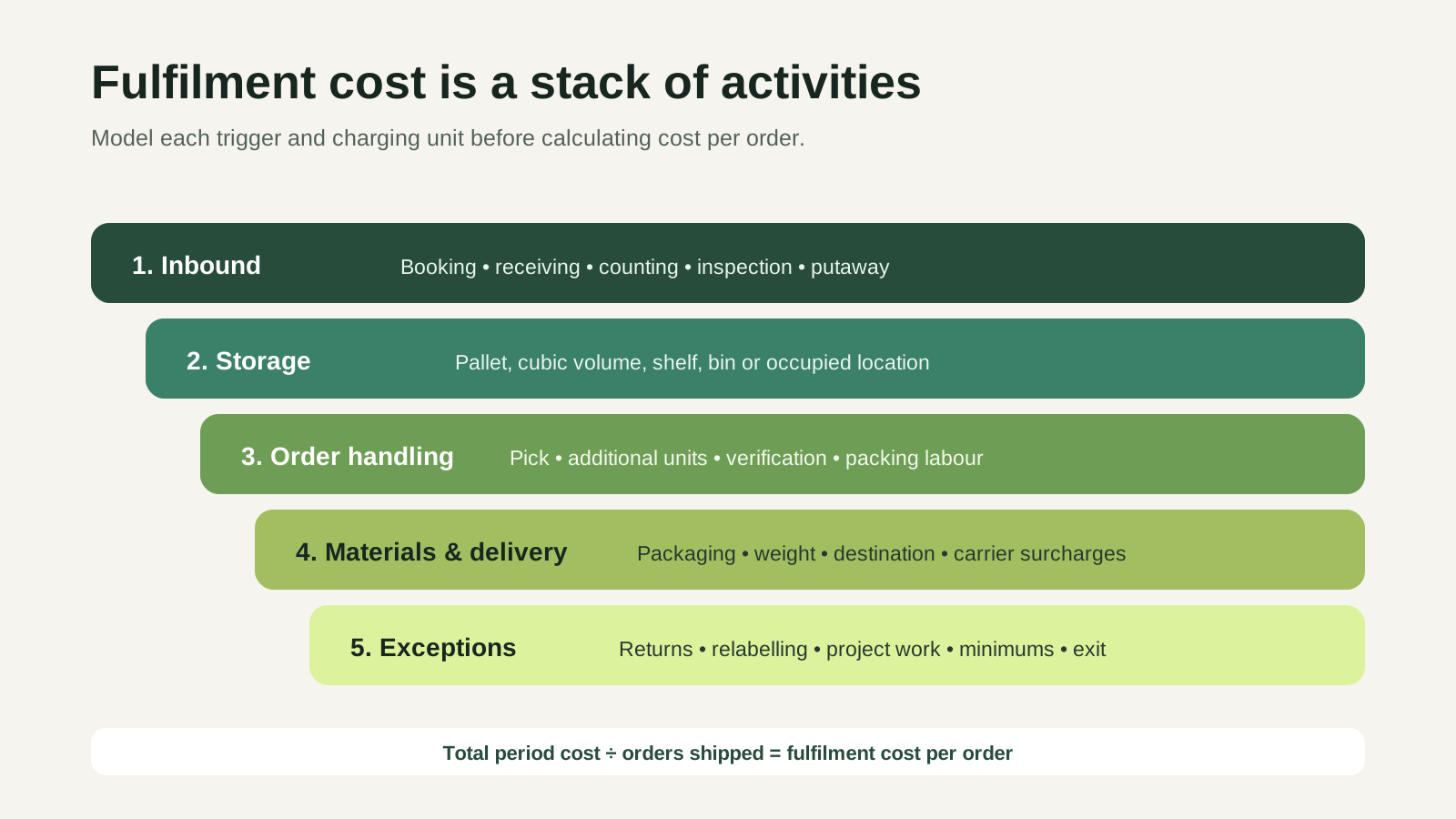
A 3PL quotation is not one price per order. It is a model of how inventory enters the warehouse, occupies space, generates work and leaves through a carrier. Two providers can use different charging units for the same operation, which makes the lowest headline rate a poor basis for selection.
The most useful way to compare Singapore fulfilment quotations is to build a representative month, show every provider the same data and trace the price from inbound receipt to return or final delivery.
Stashworks does not currently publish a rate card, minimum commitments or service-level prices. The cost categories below explain how to read a proposal; they are not Stashworks rates.
Begin with the operating assumptions
A quotation is only as accurate as the profile behind it. If a provider assumes one item per order, small parcels and clean inbound cartons, the result will change when actual orders contain three items, packaging is oversized or stock arrives mixed.
Ask the provider to state its assumptions beside the price. Supply:
- Inbound shipments, cartons, pallets and units
- Average and peak storage by pallet, cubic volume or location
- Monthly orders and highest daily demand
- Average order lines and units per order
- Product dimensions, weights and special handling
- Packaging requirements and materials ownership
- Destination, parcel and delivery-service profile
- Return rate and expected value-added work
Receiving and putaway
Receiving covers the work required to accept stock and make it available for fulfilment. The charge may be based on a booking, pallet, carton, unit, labour hour or a combination.
Clarify what “standard receiving” means. Counting cartons is not the same as counting units, and visible damage inspection is not a detailed quality check. Mixed SKUs, missing barcodes, inaccurate packing lists, urgent arrivals or deliveries outside the booked window can create additional work.
Ask when the receiving clock stops and inventory becomes orderable. A low inbound fee may not be attractive if stock remains unavailable for an extended period.
Storage
Storage can be charged by pallet, cubic metre, shelf, bin, unit or occupied location over a defined period. The billing unit should match the physical product and the way it is stored.
Examine rounding and minimums. A partly used pallet location may still be billed as a full pallet. Packaging materials may occupy separately charged space. Slow-moving or oversized stock may have different terms.
Storage should also be viewed through inventory turnover. If order volume remains stable but stock holding grows, cost per order will rise even when the storage rate does not change.
Pick and pack
The base fee often covers an order and a specified number of lines or units. Additional items, heavy products, fragile handling, serial capture, channel-specific work or special packaging can be charged separately.
Ask whether order validation, shipping-label generation and standard quality checks are included. A quotation should make clear where ordinary fulfilment ends and value-added work begins.
Packaging materials
Boxes, mailers, tape, void fill, protective material and printed inserts may be included, charged per use or supplied by the brand. The commercial model should match the brand experience and product risk.
If you supply branded materials, confirm receiving, storage, stock tracking and replenishment. Also agree what the warehouse may use when the preferred material is unavailable; an improvised substitute can affect both cost and presentation.
Delivery
Delivery is often the largest variable component because parcel dimensions, weight, destination, speed, carrier and surcharges all matter. Ask whether rates are passed through, marked up or bundled with warehouse handling.
Clarify volumetric-weight rules, fuel and peak surcharges, restricted locations, redelivery, address correction, insurance and claims. International delivery should be scoped separately because destination, duties, documentation and service choices differ.
Returns and reverse logistics
A return is not one activity. The warehouse may receive the parcel, identify the order, inspect the product, photograph it, test it, repack it, return it to saleable stock, quarantine it or dispose of it.
Define each outcome and its charging unit. Otherwise, a low “return fee” may cover only the first scan while the work that determines inventory value is billed separately.
Value-added and project work
Kitting, bundling, relabelling, repacking, inserts, quality inspections, marketplace preparation and one-off projects should have an agreed unit or hourly basis.
Stashworks lists kitting, consolidation, ecommerce management and custom solutions within its current service offering. The applicable process and price require a tailored scope.
Technology, account and minimum charges
Review onboarding, integrations, user access, reporting, account management and technical project charges. Ask whether the standard connection covers every channel workflow or only basic order import.
Minimum monthly spend, storage commitments or order requirements can materially affect low-volume months. Record how any shortfall is calculated and whether the commitment changes after launch.
Exit and stock-removal costs
Termination costs are easy to ignore during selection. Check notice periods, final stock counts, palletisation, data export, stock collection, disposal and unpaid-balance conditions.
A fair cost is not necessarily a hidden cost. The goal is to understand it before the business depends on the operation.
Compare a normal month and a peak month
Create two scenarios using the same line items. The normal month shows steady-state economics; the campaign month reveals extra picks, labour, packaging, carrier and minimum-or-maximum assumptions.
Cost areaNormal-month inputPeak-month inputReceivingRoutine replenishmentPre-campaign stock buildStorageAverage occupied volumeHighest pre-campaign volumeOrdersTypical lines and unitsPromotional bundles and daily spikePackagingStandard material mixCampaign inserts or special packsDeliveryNormal parcel profilePeak surcharge and service mix
DHL Singapore’s official fulfilment calculator separates warehouse handling, storage and delivery and notes that exact pricing depends on product characteristics. That is a useful reminder that public estimates are directional; only a complete operating profile can produce a tailored proposal.
Turn the quotation into a monthly model
For every line, record the volume, unit, rate, included allowance, trigger and total. Add the results, then divide by shipped orders to understand the effective cost per order. Keep delivery both included and separate if customers pay it directly.
To request a scoped quotation, send Stashworks your product, inventory, order and delivery profile through the contact page. The objective is a model you can test, not a rate that only applies to the simplest order.
For procurement and management approval, combine the pricing model with How to Build a 3PL RFP and How to Build a 3PL Business Case for Management Approval.