A polished sales presentation can make several 3PL providers look interchangeable. They are not. Two warehouses in the same part of Singapore may use different receiving controls, integration methods, pricing units, carrier arrangements and escalation practices. Those differences usually become visible only after inventory and customer orders are already moving.
The safest selection process begins with your own operating requirements, then tests each provider against the same evidence. This guide sets out a practical framework for Singapore ecommerce businesses—from preparing a data pack to scoring proposals and running a pilot.
Define the job before you compare providers
A 3PL cannot propose the right process if the requirement is expressed only as “store and ship our products”. The provider needs to understand the physical inventory, order pattern, sales channels, delivery promise and exceptions that make the operation distinctive.
Your initial data pack should include:
- Active SKU count, planned launches and product retirements
- Dimensions, weight, barcode status and handling needs for every SKU
- Monthly orders, daily peaks, seasonality and campaign forecasts
- Average order lines, units per order and common product combinations
- Current and expected storage footprint
- Sales channels, destination markets and integration requirements
- Packaging, kitting, returns and quality-control rules
Amazon Singapore’s official selection guidance recommends a similar preparation step, including volume, basket size, SKU count, product measurements, common combinations and ecommerce software.
Evaluate operational fit before commercial fit
A low quotation has little value if the warehouse cannot safely and consistently handle the product. Begin with physical and process compatibility before negotiating price.
Product and storage requirements
Discuss fragility, expiry dates, batches, serial numbers, liquids, temperature sensitivity, oversized items and dangerous-goods status where relevant. Ask what the provider handles routinely, what requires special approval and what it will not accept.
Do not treat “experience in ecommerce” as proof of product fit. Apparel, supplements, furniture and electronics create very different storage, picking and returns requirements.
Receiving and inventory control
Inventory accuracy begins before putaway. Ask what advance information is required, how appointments are booked, whether cartons or units are counted, how damage is photographed and when discrepancies are reported.
Then follow an adjustment through the system. Who may change stock? Is a reason recorded? Can the client see the history? How are returned, damaged and quarantined units separated from saleable stock?
Picking, packing and quality checks
Request a walkthrough from order release to carrier handover. Look for controls rather than reassuring language. Scan-based picking, location discipline, quantity verification and clear packing instructions reduce dependence on memory.
Stashworks’ published WMS process describes QR scanning during picking and a second verification at packing. Ask to see how those controls would handle variants, bundles, replacements and items without standard barcodes.
Test the technology with real exceptions
A standard order flowing successfully through an integration proves very little. The difficult cases are cancellations after release, address changes, split shipments, bundles, partial stock and channel-specific status updates.
Use a structured demonstration. Create test orders that cover simple and difficult scenarios, then check the result in the warehouse system and sales channel. Confirm who monitors failed synchronisation and how orders are recovered without duplication.
Compare delivery capability as a system
Carrier choice should reflect parcel profile, destinations, delivery speed and customer expectations. Ask which carriers are used, how services are selected, what cut-offs apply and whether the client can choose rules by channel or order type.
Then examine exceptions. Failed deliveries, address corrections, damaged parcels and claims can consume more effort than the initial label. The proposal should explain ownership and charges at each stage.
Build a like-for-like total cost model
Ask every provider to price the same sample month. Include inbound receipts, average storage, orders, order lines, packaging, delivery, returns and value-added work. Also provide a campaign scenario with the expected daily peak.
Record the charging unit, included allowance, trigger and price for each component. Clarify minimum monthly spend, onboarding, integrations, account management, packaging storage, project work and stock removal at termination.
The cheapest normal month may not be the cheapest operating model. Consider the cost of exceptions, management time and a poor fit that requires another migration.
Assess capacity, resilience and communication
Every warehouse can describe itself as scalable. Ask what scaling means operationally. How are forecasts collected? When must campaign volume be confirmed? How are labour, packing stations, packaging supplies and carrier collections secured?
Discuss continuity for power, system and facility interruptions. The level of detail should match the risk your business carries; avoid assuming a generic continuity statement covers your products and channels.
Meet the people who will manage the account after the sale. Agree how routine reports, urgent exceptions and unresolved problems move through the organisation. A named escalation path is more useful than a promise of “dedicated support” without response expectations.
Use a weighted scorecard
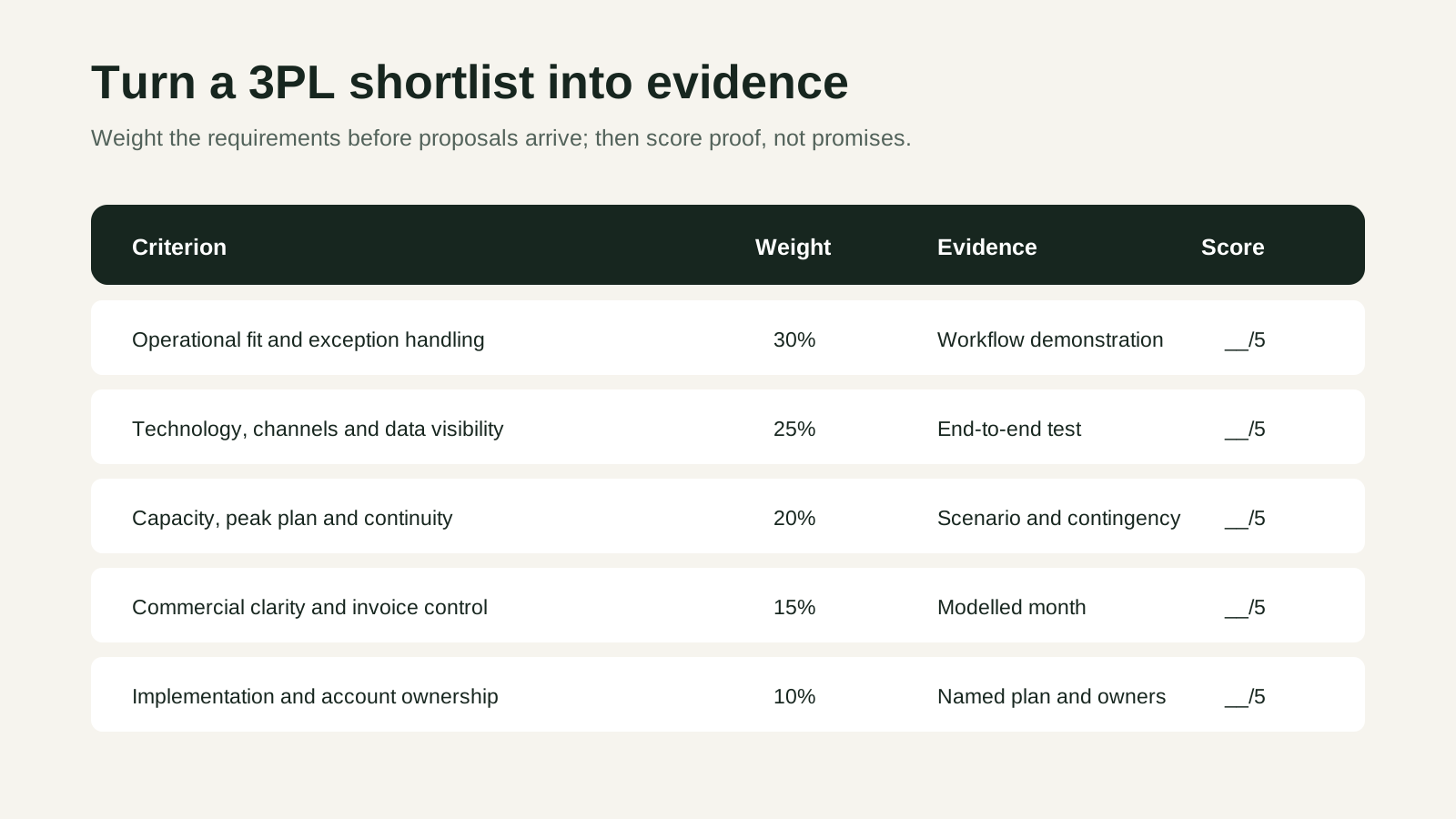
A scorecard prevents price or presentation quality from dominating the decision. Weight each category according to business risk, define what good evidence looks like and record the source of each score.
CategoryIllustrative weightEvidence to requestProduct and process fit25%Workflow demonstration and handling examplesInventory and accuracy controls20%Receiving, scanning, adjustment and count proceduresTechnology and integrations15%Live test cases and failure-management processService and communication15%Reporting, escalation and account-team structureTotal cost15%Priced normal and peak scenariosCapacity and continuity10%Forecast process and contingency evidence
The weights above are illustrative. A regulated or fragile product business may place more weight on handling controls; a campaign-driven seller may prioritise peak capacity and integration reliability.
Run due diligence before signing
Visit the operation where practical. Observe receiving, location discipline, picking, packing and how exceptions are handled. Speak to relevant references with a similar product and order profile rather than relying only on the provider’s largest client.
Review the service agreement, pricing schedule, liability, insurance, data ownership, notice period and stock-removal terms. Important operational promises should appear in the agreed documents, not remain in meeting notes.
Plan a controlled onboarding test
Selection is not complete when the contract is signed. Use test orders, opening-stock reconciliation and a monitored launch period to confirm that the proposed workflow performs as designed.
To evaluate Stashworks, begin with its verified services and WMS description. Then provide your operating data and ask the team to demonstrate how the service would handle your normal orders, exceptions and campaign peak.
For a more structured selection process, use How to Build a 3PL Request for Proposal and the 3PL Warehouse Audit guide before final provider selection.
Source: Amazon Singapore, Best Practices for Choosing a 3PL.