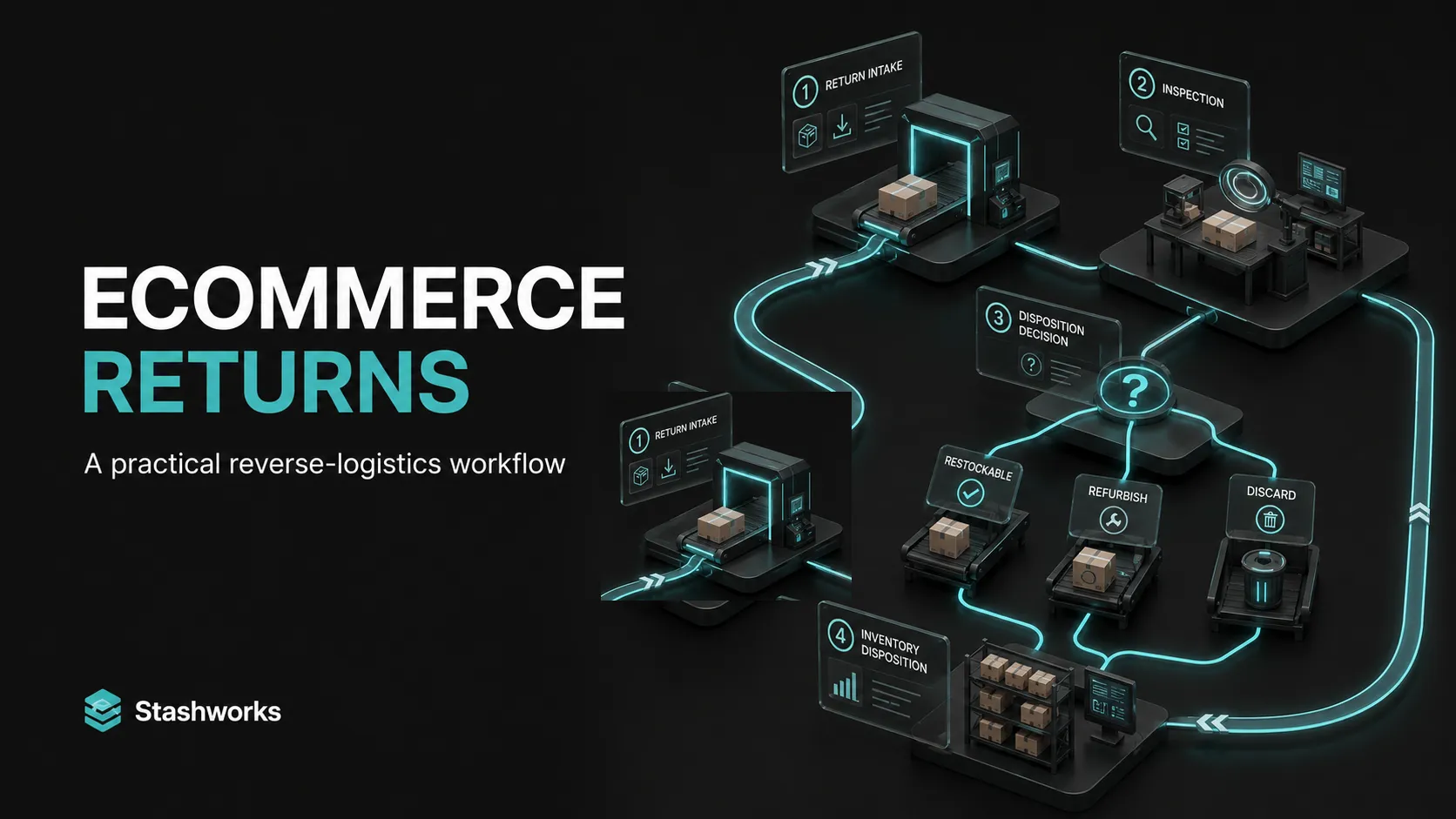
A return is not simply an outbound order travelling in reverse. Outbound fulfilment usually starts with a known sellable item and a known destination. A returned parcel arrives with uncertainty: the reason may be unclear, the packaging may be damaged, the product may no longer be saleable, and the financial outcome may already be moving through a refund or exchange process.
That is why reverse logistics needs a disposition workflow, not just a return address. The operation has to identify the order, control the physical movement, inspect the item, decide what happens to its inventory value and make sure the customer-facing and warehouse records agree.
Begin the return before the parcel moves
The customer-facing return request should collect enough information to create a useful warehouse instruction. At minimum, the business needs the order, item, quantity and reason for return. Depending on the product, photographs or additional details may be useful before transport is authorised.
The return policy and the warehouse process are related but not identical. The policy tells the customer what is allowed. The warehouse procedure tells the operation what to do when the parcel actually arrives.
Create one return reference that follows the item
Returned stock is difficult to control when a warehouse receives an unidentified parcel. A return merchandise authorisation, return order or equivalent reference should connect the physical parcel to the original order and expected item.
That reference also makes it possible to distinguish an authorised return from an unexpected parcel, duplicate return or product that does not belong to the business.
The transport route should match the economics of the return
Not every item should follow the same return method. Low-value products, bulky products, dangerous goods, international orders and items that need rapid replacement can require different decisions.
The business should define whether the customer receives a label, uses a drop-off option, arranges their own shipment or follows another process. The warehouse needs visibility of the expected return so it can recognise the parcel when it arrives.
Receiving a return is an inspection event
The returned parcel should enter a controlled area rather than going directly back to normal stock. Staff first identify the return, compare the contents with the expected item and apply the agreed inspection standard.
Inspection might cover packaging condition, product condition, signs of use, completeness, serial or batch details and whether accessories are present. The level of inspection should reflect the product and the commercial decision that follows.
Disposition is the key reverse-logistics decision
A useful returns process does not stop at “received”. It records what the unit became. If an item is saleable, when does it return to available inventory? If it needs repacking, who completes that work? If it is damaged, who can authorise a write-off?
The disposition rule protects inventory integrity. Without it, returned stock can sit physically in the warehouse while the system shows the wrong status—or, worse, an unsaleable unit can accidentally return to the picking location.
Inventory and refund timing should be deliberately separated
Customer service may want to refund quickly, while operations may need time to inspect the product. The business should decide whether a refund is triggered at request, carrier scan, warehouse receipt or completed inspection.
There is no universal answer. The important point is that the commercial policy and physical workflow are designed together so that the customer is not waiting for an undefined warehouse event and inventory is not updated before the item is actually verified.
Returns create data that should travel upstream
Reason codes are useful only when someone analyses them. A high rate of “wrong item received” points to fulfilment accuracy. “Damaged in transit” may point to packaging or carrier handling. “Not as described” may belong to merchandising or product content rather than logistics.
Connect return reasons with SKU, channel, order date and fulfilment data. The objective is not to prevent every return; it is to distinguish normal customer preference from an operational defect that can be reduced.
International returns require an extra customs and tax check
Cross-border returns can involve import documentation, duties or GST that do not arise in a domestic return. Singapore Customs publishes procedures for refunds of duties and GST in qualifying cases, including certain cancelled, re-exported or overpaid shipments.
Do not assume every returned order qualifies. The business should confirm the applicable treatment with its customs or declaring agent and retain the relevant commercial, shipping and refund documentation.
Measure return-processing age as well as return rate
A return rate tells you how often products come back. It does not tell you whether the warehouse is processing those units effectively.
Useful operational measures include time from receipt to identification, time from inspection to disposition, units waiting in quarantine, percentage returned to saleable stock, and exceptions older than the agreed review period.
Design for the campaign and peak case
Returns frequently arrive after the sales peak that created them. That means reverse-logistics workload can increase when the outbound team is already preparing for the next campaign or replenishment cycle.
Forecast return volume separately from outbound orders and ensure there is physical space for inspection and quarantine. A warehouse can appear to have enough storage capacity while returned inventory quietly occupies uncontrolled floor space.
A good returns process protects both experience and inventory
Shopify distinguishes returns management—the customer and policy workflow—from reverse logistics, which includes the physical movement and downstream disposition of returned goods. DHL similarly treats reverse logistics as a multi-stage flow rather than a single shipment back to the seller.
For a fulfilment scope, document the return methods, inspection rules, disposition options and decision owners before launch. Review Stashworks’ ecommerce fulfilment service and discuss how returns should connect to your inventory and customer-service process.
For the international layer, continue with Cross-Border Ecommerce Returns, which covers customs treatment, return-to-origin economics and inventory disposition when returned goods cross a border.
Sources: Shopify, Ecommerce Returns Management; Shopify, Reverse Logistics Guide; Singapore Customs, Refund of Duties and GST.