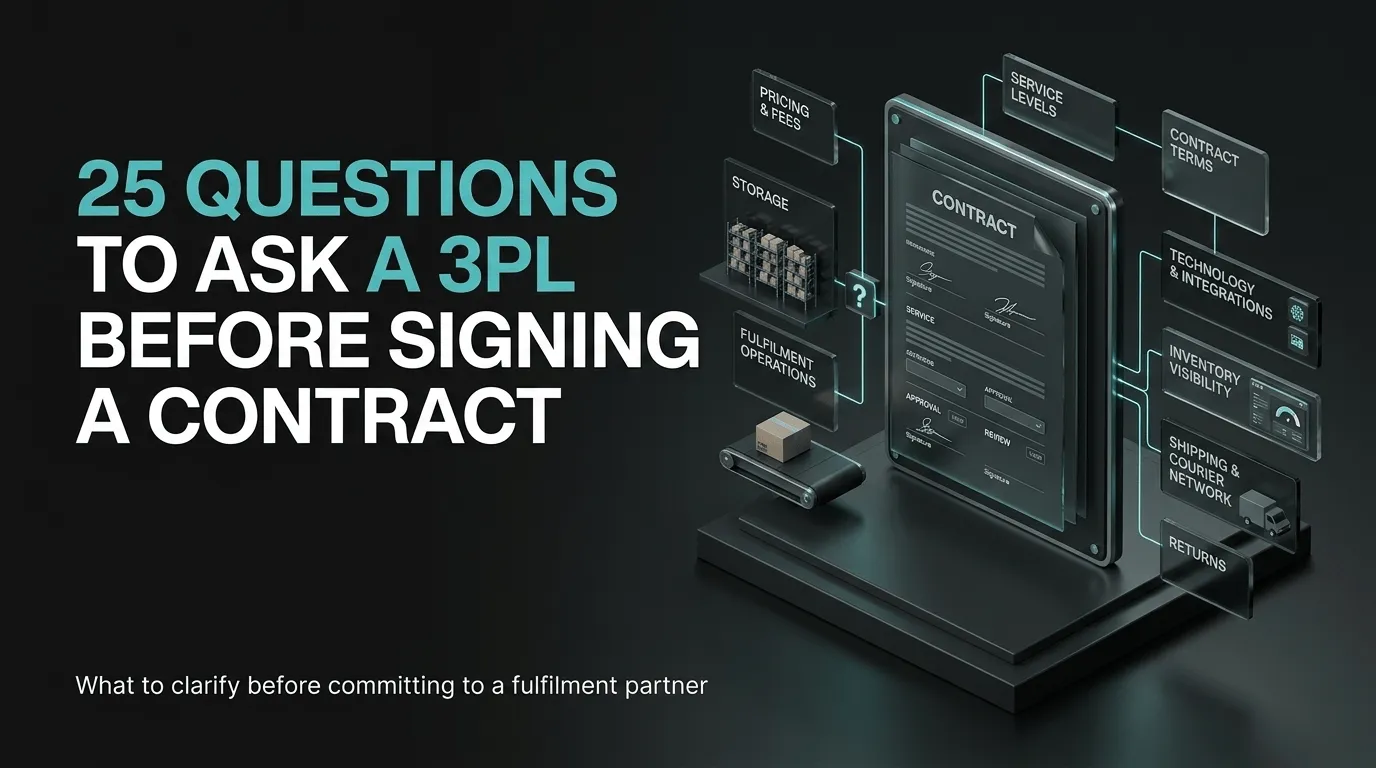
A 3PL sales conversation should reduce uncertainty. If you leave with only a warehouse tour, a headline rate and a promise that “the system integrates”, the most important work has not happened.
The questions below are designed to uncover how the provider handles your stock, order data, customer promise and commercial risk. They are not a script to read without context. Share your operating profile first, then use the questions to test whether the proposed process is specific, evidenced and contractually clear.
Bring representatives from operations, ecommerce, finance and customer service where possible. Each team sees a different part of the risk.
Before the meeting: give the provider enough information
Generic questions produce generic answers. Supply monthly and peak orders, SKU data, product measurements, order-line profile, storage needs, sales channels, returns and special handling before requesting a detailed proposal.
Amazon Singapore’s official guidance recommends preparing volume, basket size, SKU count, product dimensions, common combinations and ecommerce software. This information lets the provider identify fit and price the same operation that you expect it to run.
Questions about product and operational fit
Begin with the physical work. A provider may be excellent for apparel and unsuitable for large, fragile or date-sensitive products.
- Which product types do you handle routinely, and which require special approval? Ask for relevant examples and restrictions.
- How would you store and pick our specific products? The answer should reflect dimensions, velocity, fragility and identification method.
- Can you support our bundles, inserts, relabelling or branded packaging? Request the operating method and charging unit.
- What happens when our process changes? Understand how instructions are approved, tested and priced.
Questions about receiving and inventory
Most inventory problems begin with an unclear opening balance or an undocumented adjustment. Follow stock from arrival through storage, count and return.
- What information and labels are required before stock arrives? Record appointment, carton, pallet and packing-list rules.
- What does standard receiving include? Distinguish carton count, unit count, visible inspection and detailed quality checks.
- How are shortages, overages and damage reported? Ask for timing, evidence and resolution ownership.
- When does received inventory become available for orders? Avoid assuming an inbound delivery is immediately sellable.
- How are stock adjustments controlled and audited? Look for permissions, reason codes and history.
- How are saleable, damaged, returned and quarantined units separated? The system and physical locations should agree.
Questions about order accuracy and packing
Ask the provider to demonstrate the controls that prevent errors and the investigation process used when those controls fail.
- How does an order move from our channel into the picking queue? Include release rules and cut-offs.
- How are SKU and quantity verified during picking? Confirm scanning, barcode and exception procedures.
- What is checked again at packing? Ask how bundles, inserts and channel-specific rules appear to the packer.
- How are picking or packing errors investigated? The process should identify root cause, not only reship the order.
Stashworks describes QR-assisted picking and a second verification during packing in its WMS workflow. Prospective clients should test those controls with their own variants and order combinations.
Questions about technology and data
An integration should be assessed as a business workflow, not a logo on a sales page. Include ordinary orders and the exceptions that create manual work.
- Which of our platforms are supported, and what exactly synchronises? Cover orders, cancellations, inventory, tracking and returns.
- How frequently does data move? Confirm whether timing differs by platform.
- Who monitors integration failures, and what is the fallback? Ask how missing or duplicate orders are reconciled.
- What can our team see and export? Review stock states, order status, reports and audit history.
- How do we retrieve our data if the relationship ends? Define format, timing and ownership before onboarding.
Questions about delivery and returns
The warehouse does not control every carrier event, but it should explain how shipments are prepared, handed over and escalated.
- Which carriers and service levels are available for our parcel profile? Discuss domestic and international needs separately.
- What are the order and carrier collection cut-offs? Put applicable service commitments in the agreement.
- How are failed delivery, damage and claims handled? Identify the owner and potential charges at each stage.
- What happens to a returned item? Define inspection, photographs, repacking, restocking, quarantine and disposal.
Questions about commercial terms and governance
The final questions connect the operating promise to price, accountability and exit risk.
- Can you price a normal month and a campaign month using our data? Require receiving, storage, fulfilment, packaging, delivery, returns, minimums and special work to be visible.
- What happens when the relationship underperforms or ends? Review reporting, escalation, liability, notice, stock release, final reconciliation and data export.
What evidence should accompany the answers?
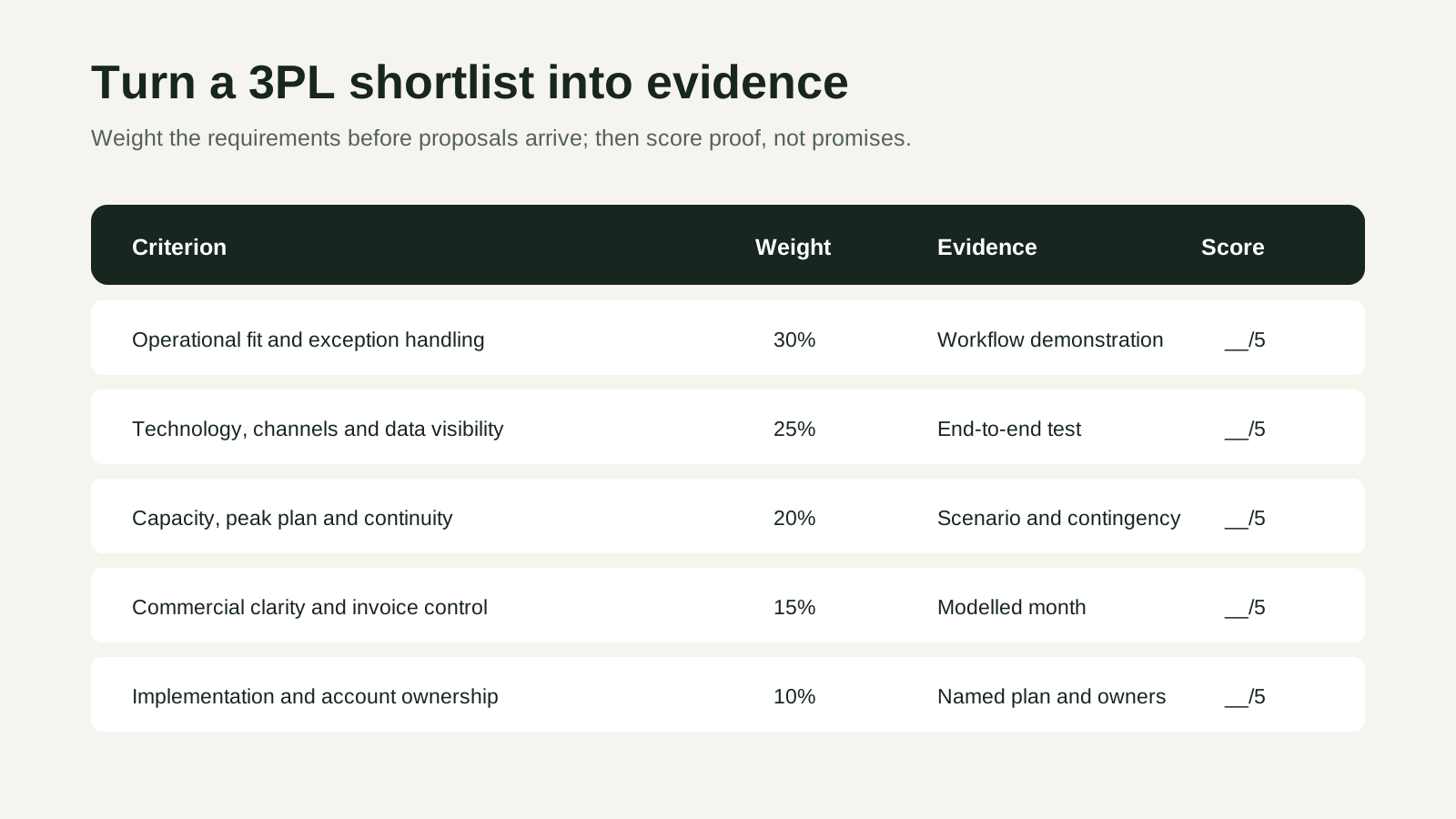
A confident explanation is useful, but evidence makes it comparable. Ask for a workflow demonstration, sample reports, a priced scenario, applicable service terms and references relevant to your product and volume.
Turn the meeting into a decision record
After each discussion, update a weighted scorecard and record unresolved questions. Do not award points for a capability until the evidence matches your requirement. Important commitments should appear in the operating procedure, pricing schedule or service agreement before signing.
To use this framework with Stashworks, review its current service list and system description, then bring your actual order and inventory data to the discussion.
Turn the questions into formal governance checks with 3PL Contract Terms Explained and How to Audit a 3PL Warehouse Before You Sign.
Source: Amazon Singapore, Best Practices for Choosing a 3PL.