

A fulfilment proposal can look complete and still leave important charges outside the headline rate. The problem is not that every additional fee is unreasonable. Warehouses genuinely do more work when stock arrives without labels, an order needs special packaging or a parcel must be delivered again. The problem is discovering those rules only after the operation has launched.
A better review asks three questions about every charge: what event triggers it, how it is measured and what evidence appears on the invoice. That turns a list of rates into a commercial model the finance and operations teams can actually test.
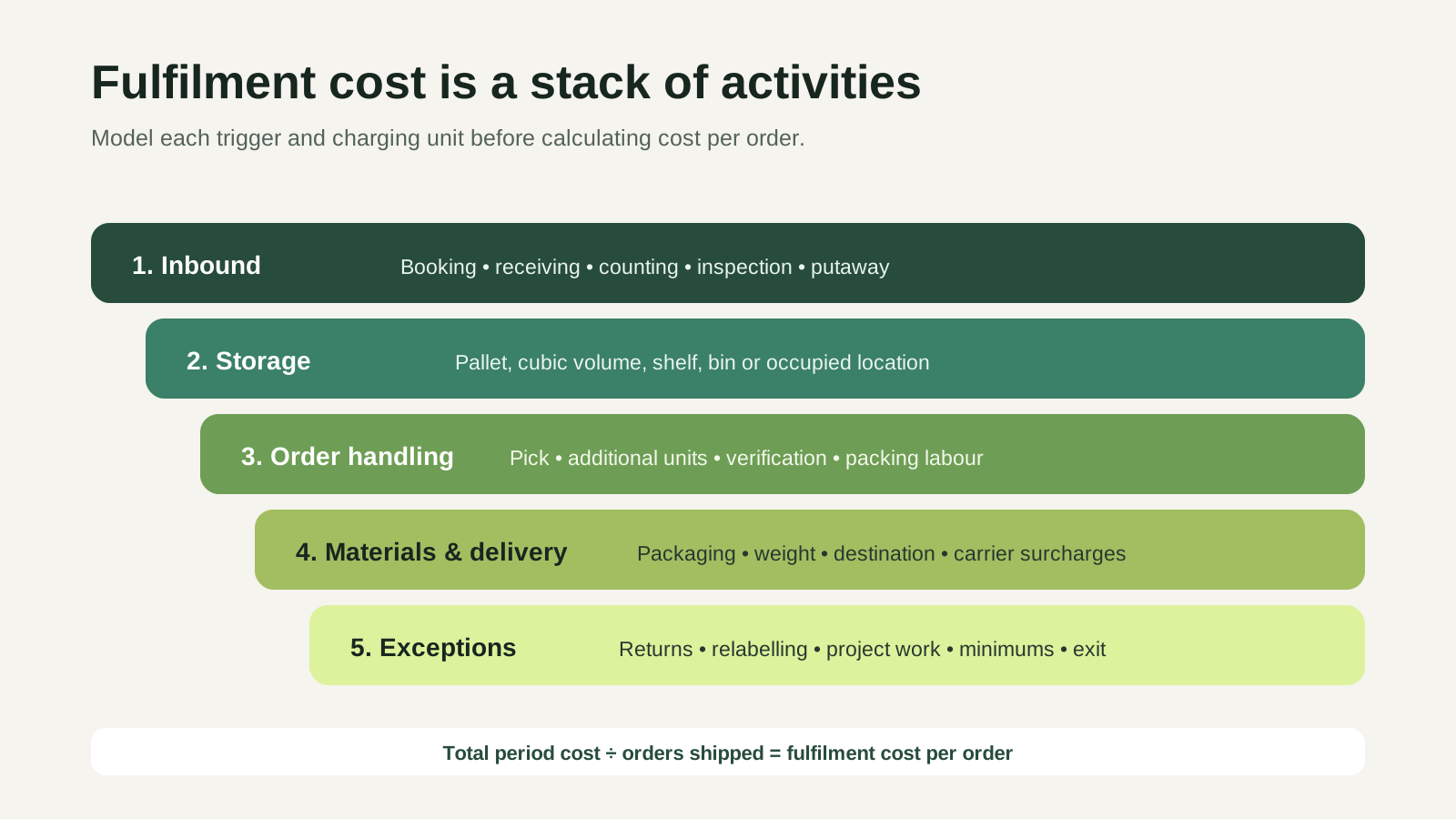
First, distinguish a hidden fee from a variable fee
A variable fee changes when the underlying work changes. An extra-item pick charge, for example, may be entirely reasonable when an order contains more units than the base rate includes. It becomes difficult to manage when the quotation does not define the included allowance or when invoices do not show the triggering quantity.
A hidden fee is better understood as a charge the customer could not reasonably identify or model before signing. Clear definitions, realistic sample calculations and itemised invoices matter more than a promise that there are “no hidden fees”.
Inbound charges that are easy to overlook
Receiving is often quoted by pallet, carton, unit or labour hour. The standard rate may assume that deliveries are booked correctly, cartons contain one SKU, labels scan properly and quantities match the advance notice. Real inbound stock does not always arrive that cleanly.
Ask what happens when a shipment is late, unbooked, mixed, damaged or missing paperwork. The following activities can sit outside a standard receiving rate:
- Manual unit counting instead of carton-level verification
- Sorting mixed SKUs or rebuilding pallets
- Applying or replacing barcodes and product labels
- Detailed quality checks, photography or serial-number capture
- Disposal of damaged cartons or unwanted packing material
- Waiting time when a vehicle or shipment cannot be processed as planned
These are not automatically unfair charges. The commercial risk comes from an undefined “non-compliant inbound” category that allows any irregularity to be billed without an agreed unit or approval process.
Storage rules can change the effective rate
A storage rate is meaningful only when the billing unit and measurement method are clear. A provider might charge per pallet location, cubic metre, shelf, bin or unit. Partly occupied locations may be rounded up, and the billing period might be daily, weekly or monthly.
Clarify whether packaging supplies, quarantined stock, returned goods and goods awaiting disposal occupy separately billed space. Ask whether slow-moving, oversized or hazardous products attract a different rate and whether the provider can show the quantity used to calculate each invoice.
Pick-and-pack allowances need precise boundaries
The base order fee may cover one order, one line, one unit and standard packing—or a different combination. Compare quotations only after each provider has priced the same basket.
Ask whether order validation, shipping-label generation and routine packing checks are included. If a marketplace requires a specific insert, label or pack configuration, confirm whether that is part of the base workflow or a value-added service.
Packaging can produce two separate costs
There may be a charge for the physical material and another for the work needed to use it. Branded boxes, custom inserts, protective materials and unusually complex packing can therefore affect both inventory and handling costs.
If the brand supplies its own packaging, clarify who receives it, where it is stored, whether it is tracked and what happens when it runs out. A replacement-material rule should be agreed before launch so that cost and customer presentation do not depend on an improvised decision.
Delivery surcharges often sit outside the rate card
Carrier pricing can vary with actual or volumetric weight, destination, service speed and seasonal conditions. A quoted delivery band may exclude fuel, peak-period, remote-area, restricted-location, redelivery, address-correction or oversized-parcel surcharges.
Ask whether carrier charges are passed through, marked up or bundled. For failed deliveries, establish who decides the next action, how many attempts are included and whether the parcel is returned to the warehouse. International orders need a separate review of documentation, duties, taxes and destination-specific charges.
Returns are workflows, not a single fee
“Returns processing” can mean receiving and scanning a parcel, or it can include inspection, photography, testing, repacking, relabelling and a decision about whether the item is saleable. Those are materially different services.
Create a return decision path with an agreed price for each outcome. The business should know the difference between an item returned to stock, quarantined for review, sent back to the brand or disposed of. It should also know who can approve write-offs.
Technology and account charges deserve operational scrutiny
Onboarding, channel connections, order-management access, reporting, custom development, support and account management may be billed separately. A standard integration may cover basic order import but not marketplace-specific cancellations, split shipments, bundles or inventory rules.
Define what is included in implementation and what becomes chargeable change work. Ask how support is prioritised, whether additional users cost more and how data can be exported if the relationship ends.
Minimums and project fees can reshape a quiet month
A monthly minimum may apply to total spend, orders, storage or a specific service. It matters most when volume is seasonal or still growing. Model a quiet month as carefully as a peak month and show the shortfall explicitly.
One-off stock counts, campaign assembly, relabelling projects and urgent operational changes may be priced by labour hour or project. Agree who can authorise that work and whether the provider must submit an estimate before beginning.
Exit costs should be reviewed before entry
Notice periods, final stock counts, stock removal, palletisation, data export, packaging of residual materials and disposal can all create cost at the end of a contract. Check whether unpaid disputed invoices can delay stock release and what condition the inventory must be in for collection.
This is not planning for failure. A clear exit clause protects continuity and encourages both parties to maintain accurate data throughout the relationship.
Use a fee register, not a memory
Build a register beside the quotation. For every fee, record its definition, unit, rate, included allowance, trigger, approval owner and invoice evidence. Then test the register against a normal month, a quiet month and a campaign month.
When an invoice arrives, reconcile quantities before debating rates. A good invoice should make it possible to trace the billed amount back to orders, occupied storage, inbound receipts or approved project work.
Questions that expose ambiguity
The strongest commercial questions are specific enough to produce a written rule rather than a reassuring answer. Use the following as a final review:
- What does the base order fee include, down to lines, units and standard materials?
- Which inbound conditions trigger manual work, and who approves it?
- How is storage measured, rounded and evidenced?
- Which carrier surcharges sit outside the delivery band?
- What does each return outcome cost?
- What are the minimum monthly commitments and shortfall rules?
- Which technology, support and change requests are separately chargeable?
- What costs apply when inventory leaves the warehouse?
To obtain a comparable scope, send Stashworks a representative order, inventory, delivery and returns profile through the contact page. The most useful proposal is the one your team can reproduce in a spreadsheet before the first order ships.
Commercial risk should also be reviewed alongside the operational terms. See 3PL Contract Terms Explained and the 3PL Business Case guide.