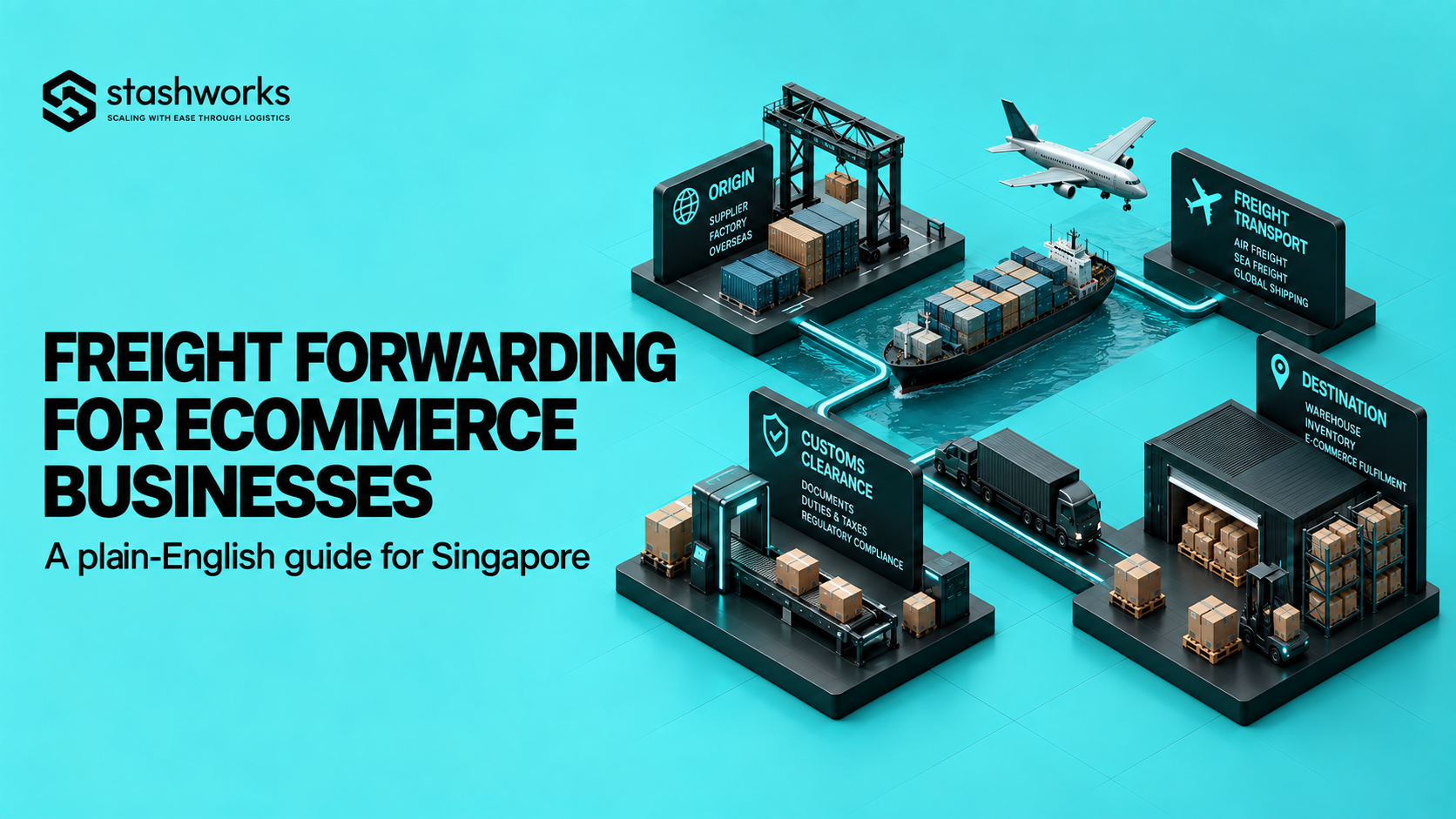
Freight forwarding can sound more complicated than it is because one shipment may involve several companies, documents and handovers before inventory reaches the warehouse.
For an ecommerce business, the useful way to think about a freight forwarder is as a coordinator of international cargo movement. The forwarder helps organise transport and the operational handoffs around it, while carriers, customs authorities, declaring agents and warehouses each have their own roles.
What does a freight forwarder actually do?
A freight forwarder arranges the movement of cargo from an origin to a destination using suitable transport services and logistics partners. Depending on the agreed scope, that can include booking air or sea freight, coordinating pickup, preparing or checking shipping documentation, arranging destination handling and connecting the shipment to customs clearance and final warehouse delivery.
The forwarder does not automatically own the aircraft, vessel or truck carrying the goods. Those transport assets are operated by carriers. The forwarder's value is coordinating the journey and the information around it.
Know the main parties in the shipment
The importer is the party bringing goods into Singapore and is responsible for ensuring import requirements are met. A freight forwarder may coordinate the shipment. A carrier physically transports the cargo. A Declaring Agent can submit customs permit applications through TradeNet on behalf of a trader. The warehouse receives the cargo after the applicable transport and clearance steps are completed.
These roles can sometimes be provided by related companies, but they should not be assumed to be the same legal or operational responsibility.
What information does a forwarder need for a quote?
Prepare the origin and destination, cargo description, number of cartons or pallets, gross weight, dimensions or volume, commercial value, required timing and any special handling requirements. Controlled, dangerous, temperature-sensitive or unusually large goods need to be identified early.
The Incoterm agreed with the supplier also matters because it helps define which party is responsible for different transport costs and risks along the journey.
Air freight and sea freight solve different inventory problems
Air freight normally prioritises speed and can suit urgent replenishment, smaller higher-value shipments or stockout recovery. Sea freight is commonly considered when shipment size is larger, timing is less urgent or the business wants to reduce transport cost per unit.
There is no universal best mode. Compare the complete effect on inventory availability, working capital, transport cost and stockout risk. The decision framework is covered in Air Freight vs Sea Freight for Ecommerce Inventory.
Documentation starts before cargo moves
Common shipment records can include a commercial invoice, packing list and transport document such as a bill of lading or air waybill. The exact permit and supporting-document requirements depend on the goods and transaction.
Singapore Customs requires importers to obtain the appropriate customs permit through TradeNet before the relevant import movement. Controlled goods can also require approval from the relevant Competent Authority.
Customs clearance is related to forwarding, but it is not the same thing
A freight forwarder may coordinate customs-related work or provide it as an additional service, but the importer should confirm who is acting as the Declaring Agent and who is responsible for the import permit, classification and supporting records.
Do not assume that booking freight automatically transfers every customs responsibility to the forwarder. Define the customs scope in writing before the shipment leaves origin.
Consolidation can make smaller shipments more practical
When a business does not have enough cargo for a full container, less-than-container-load services can combine cargo from multiple shippers into shared container space. Buyer or origin consolidation can also combine several supplier shipments before the international movement.
The trade-off is additional handling and consolidation steps. Compare the full door-to-door cost and schedule, not only the headline ocean freight rate. See Freight Consolidation Explained.
The warehouse handover should be designed before arrival
International transport is only one part of ecommerce replenishment. Cargo that reaches Singapore still needs to move into receiving, identification, quantity checking and putaway before it becomes available for orders.
Send the warehouse advance shipment information before arrival. Match SKUs, carton counts and shipment references to the receiving record. If the warehouse does not know what is coming, a successful freight movement can still end with inventory waiting at the dock.
Import cost should be evaluated as landed cost
The supplier price and freight quote are not the complete cost of imported inventory. Insurance, origin and destination charges, customs duty where applicable, import GST, clearance costs and local delivery can all affect the landed cost.
Use the framework in How to Calculate Landed Cost When Importing into Singapore before deciding whether a freight option is genuinely economical.
How Stashworks fits into the flow
Stashworks' current freight forwarding service covers import and export coordination and connects international cargo movement with warehousing and fulfilment. Its service information also notes that customs-related support can be added where required and agreed.
For a real shipment, confirm the origin, destination, mode, commodity, shipment size, Incoterm, customs responsibilities and final warehouse handover. The goal is to make the international movement and the ecommerce inventory workflow operate as one connected plan.
Sources: Singapore Customs, Import Procedures Overview; Singapore Customs, Obtain a Customs Import Permit; Stashworks, Freight Forwarding.