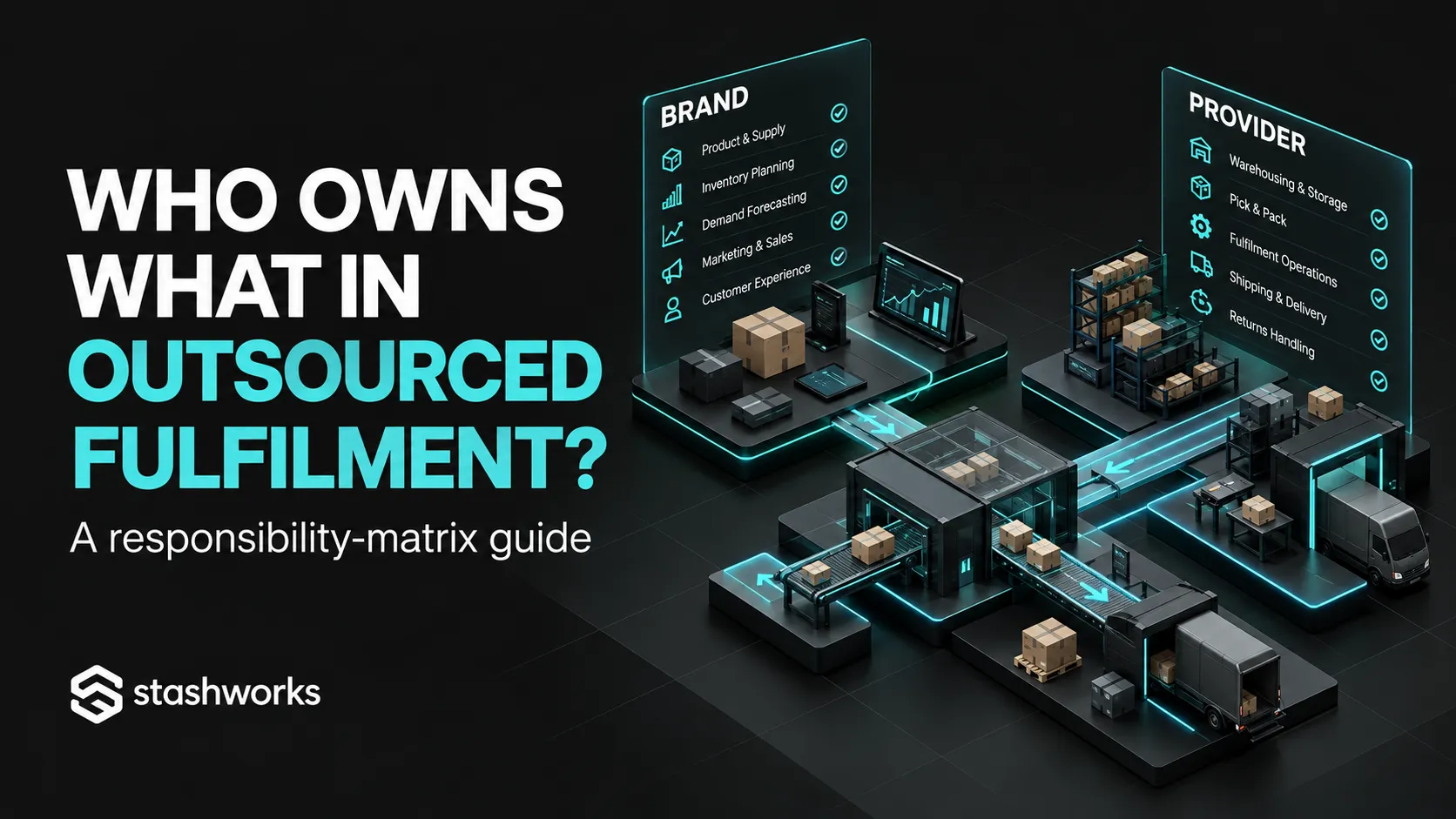
Outsourced fulfilment fails when both parties assume the other owns the same task. A responsibility matrix makes those assumptions visible before they become order, inventory or customer-service problems.
The matrix should distinguish who performs the work, who approves it, who provides information and who must be informed when something changes.
Use RACI or a simpler ownership model
RACI assigns Responsible, Accountable, Consulted and Informed roles. A smaller operation can use a simpler owner/approver/support format.
The important rule is that every recurring process has one clearly accountable owner.
Start with product master data
The brand should normally remain accountable for product identity, approved descriptions, regulated claims and commercial product decisions. The 3PL may load or use product data but should not have to invent it.
Assign SKU and barcode ownership
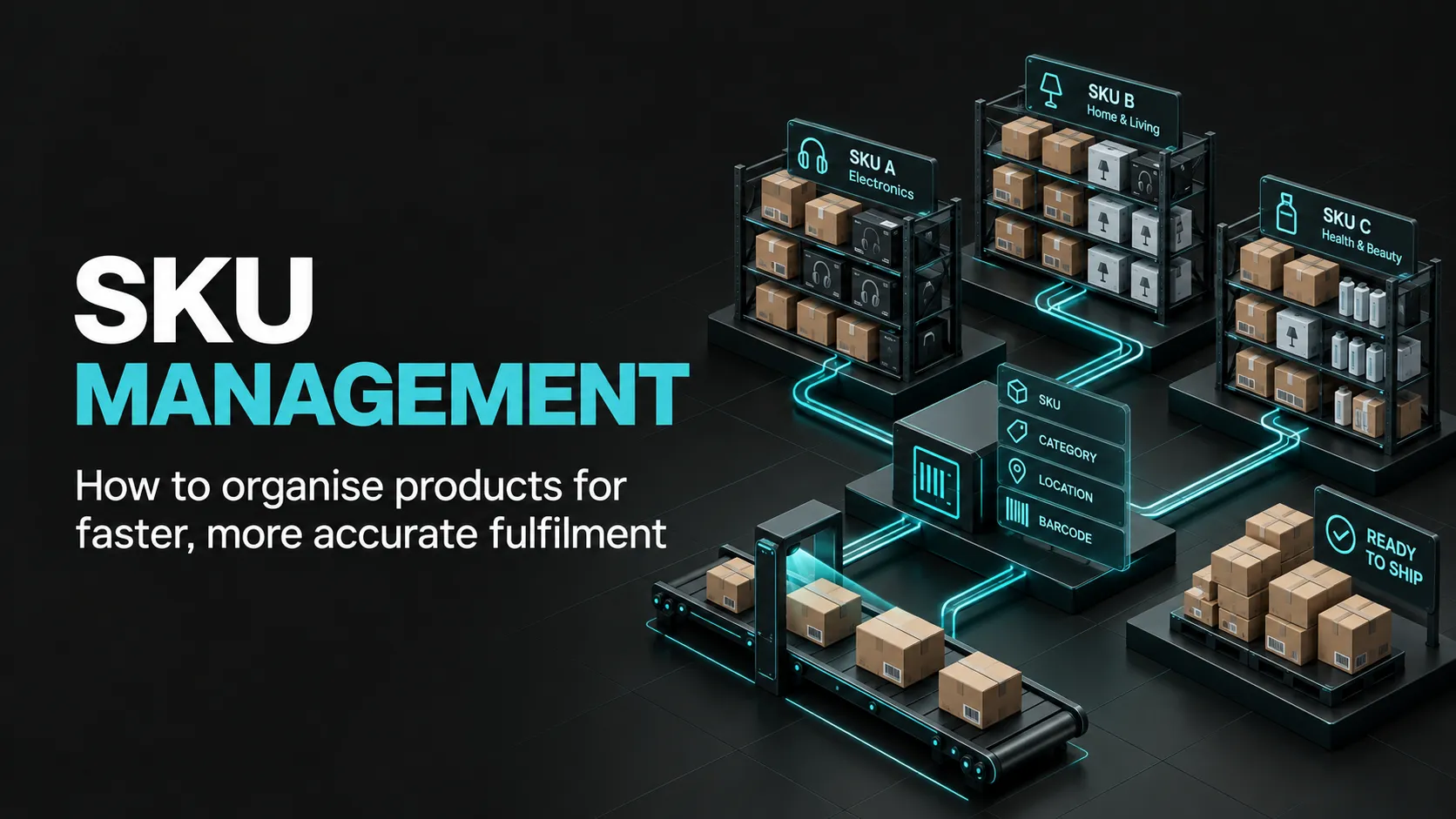
Define who creates internal SKUs, who supplies barcodes, who resolves duplicates and who approves new variants before stock arrives.
Use SKU Management for the underlying product-identity framework.
Define forecast responsibility
The brand owns demand assumptions and campaign plans. The 3PL should define what forecast information it needs to plan labour, space and carrier capacity.
A forecast is not a guarantee, but no forecast means the provider cannot prepare intelligently for known demand changes.
Assign inbound booking and documents
Decide who books delivery slots, sends advance shipment notices, provides carton details, arranges freight and handles discrepancies.
If freight forwarding is also outsourced, document where the forwarding responsibility ends and warehouse receiving begins.
Define receiving decisions
The 3PL can count and identify stock, but the brand may need to decide what to do with unexpected, damaged or unlabelled inventory. Set approval thresholds so the warehouse does not wait indefinitely for minor decisions.
Define inventory-adjustment authority
Clarify who can make quantity adjustments, write off damaged stock, release quarantine or approve disposal. High-risk changes should have evidence and approval.
Assign order-release rules
Define which order statuses are eligible for fulfilment, who controls fraud or payment holds and how cancellations are communicated after warehouse release.
Assign packaging standards
The brand approves packaging presentation and inserts; the 3PL executes the agreed workflow. Decide who procures materials and who monitors stock of custom packaging.
Define marketplace and system ownership
Identify who owns platform accounts, integration credentials, product mappings and support tickets. The 3PL can operate inside the workflow without becoming owner of the brand's core accounts.
Separate warehouse handover from delivery
The 3PL may prepare and hand parcels to a courier while a separate carrier performs delivery. Define who selects the service, manages claims and communicates delivery exceptions.
Assign returns decisions
The warehouse can inspect returned goods, but the brand may own refund policy, resale standards and customer decisions. Define disposition categories and approval thresholds.
Connect customer support to operations
Customer-service teams need access to accurate order and delivery status. Decide who answers which enquiries and when warehouse investigation is required.
Assign invoice review
The provider issues charges; the brand should own internal validation and dispute approval. Both parties should agree how billing questions are investigated.
Define SLA ownership
Decide who produces the data, who validates the metric and who owns corrective actions. A performance review becomes difficult if each side maintains a different report.
Assign change control
New SKUs, channels, pack rules, campaigns and integrations should have an approval path. Routine changes can follow a standard workflow; material scope changes may require commercial approval.
Define incident escalation
List who can pause operations, contact carriers, approve emergency work and communicate with customers during a major issue.
Include exit responsibilities
Assign inventory reconciliation, stock transfer, data export, account access removal, packaging transfer and open-order handling before the contract ends.
Use the matrix during onboarding
Stashworks' current onboarding flow begins with operation review and solution design before system connection, inventory transfer, testing and go-live. A responsibility matrix fits naturally into that design phase.
Review the matrix as the operation changes
Roles that work at launch may become wrong after a new marketplace, country or internal team is added. Update the matrix whenever scope changes.
Sources: Stashworks, 3PL Singapore; Stashworks, Technology.