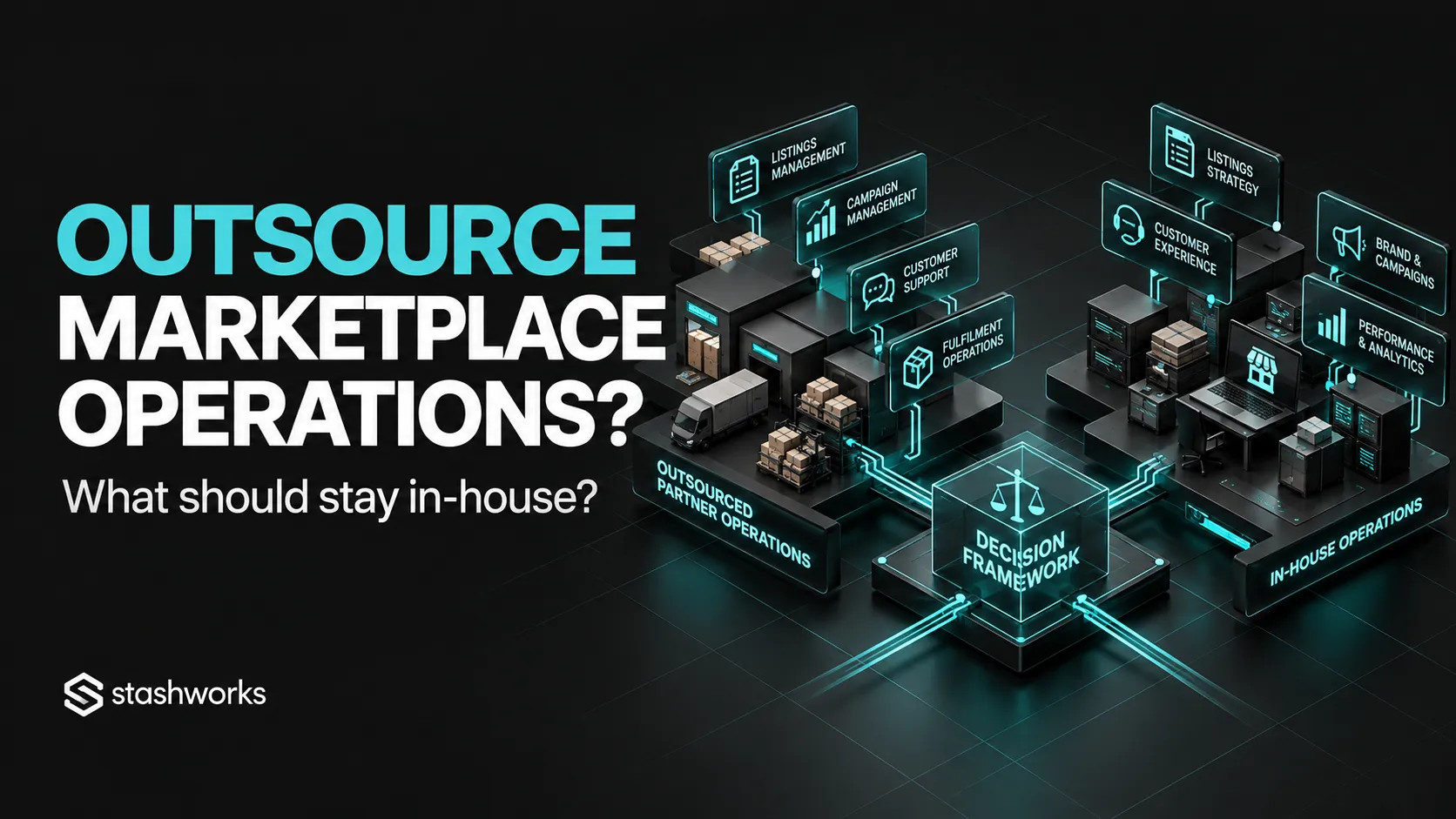
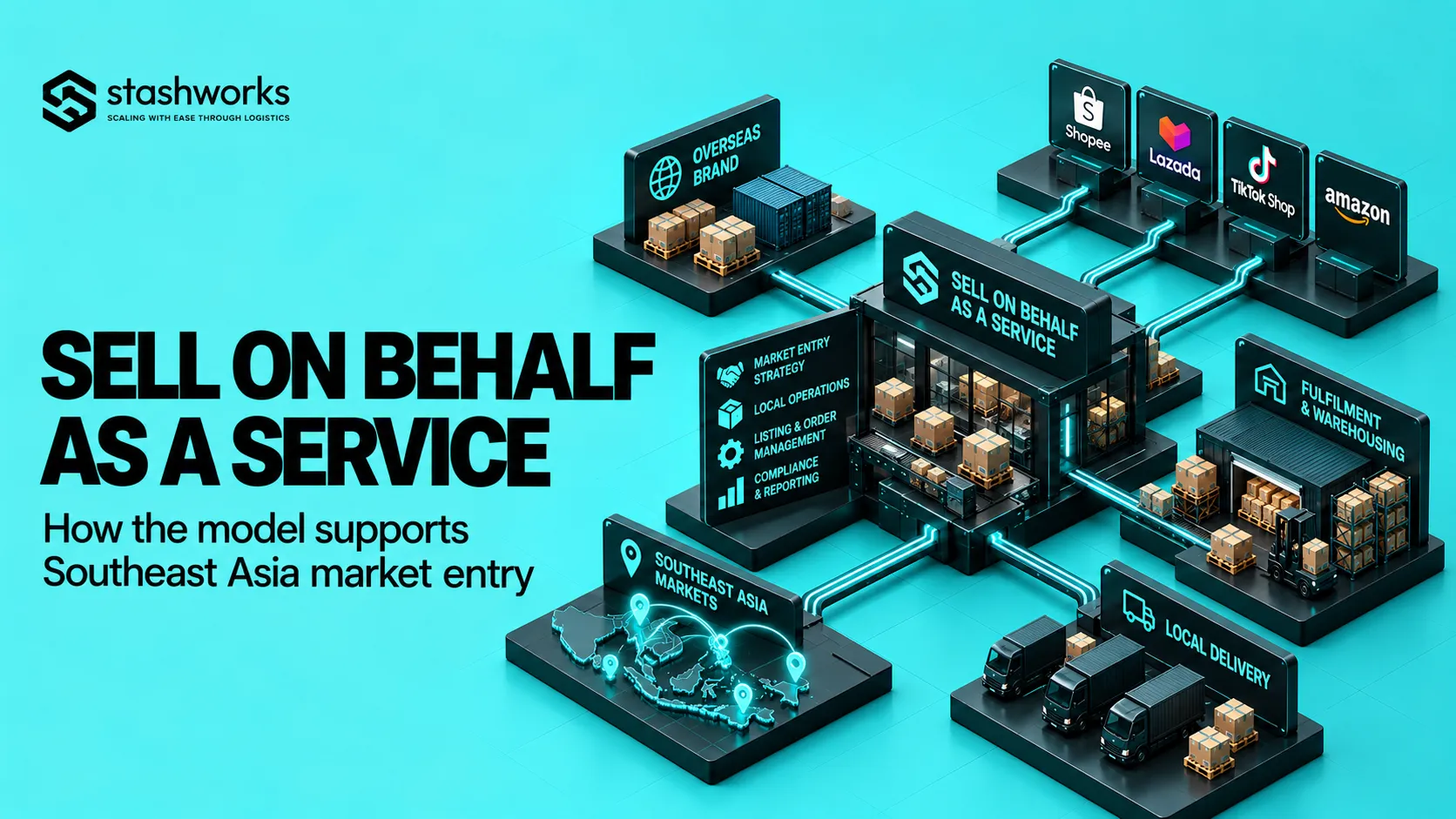
Sell On Behalf as a Service is a market-entry model for brands that want to start selling in a new country without building every local ecommerce and logistics capability independently from day one.
The key idea is operational coordination. Instead of separately arranging marketplace administration, inventory, fulfilment, delivery, customer support and the commercial selling structure, the brand works through an agreed setup that connects those functions. The exact arrangement still depends on the target country, product category, sales channels and compliance requirements.
What “sell on behalf” means operationally
Stashworks defines SOBAAS as Sell On Behalf As A Service: a market-entry solution for supported Southeast Asian markets built around an agreed combination of ecommerce operations, fulfilment and logistics support.
The model is broader than ordinary 3PL fulfilment. A 3PL typically begins once inventory and orders enter the warehouse operation. A sell-on-behalf model begins earlier, with the structure required to make products available through agreed local sales channels and connect those channels to inventory and post-purchase operations.
SOBAAS currently covers selected Southeast Asian markets
Stashworks currently lists Singapore, Malaysia and Thailand as available SOBAAS markets. Availability does not mean every platform, product category or commercial arrangement is automatically supported in every country.
The live service page explicitly states that the selling, marketplace, compliance and logistics arrangement is defined according to the target market, product category and agreed service scope. That qualification should be treated as part of the service model, not a footnote.
The model starts with market and product suitability
Before inventory moves, the first question is whether the proposed market, product and channel combination can be supported. A useful market-entry review covers demand, product restrictions, import requirements, local selling arrangements, platform eligibility, pricing, expected volume and fulfilment requirements.
This is why Stashworks' current onboarding sequence begins with market and product assessment, followed by confirmation of eligibility and operating requirements.
Marketplace operations are part of the operating layer
A new-country launch creates digital work before the first parcel is packed. Product listings need to be created or adapted, variants need correct identifiers, campaigns need local coordination and customer enquiries need an owner.
SOBAAS can incorporate marketplace operations such as listings, marketplace management, campaign support and agreed customer enquiries. These functions connect closely with Stashworks' Ecommerce Enablement service.
Local inventory changes the customer and logistics model
When approved inventory is positioned locally, orders can move through the local warehousing and fulfilment setup rather than being fulfilled one by one from the brand's home country. That can simplify the operational route after the sale, but it creates planning responsibilities around importation, stock ownership, replenishment and local inventory risk.
Stashworks describes the local inventory layer as warehousing, inventory management, pick and pack, optional kitting or custom packing, and returns processing within the agreed scope.
Delivery and returns need to be designed at the same time
Market entry should not stop at checkout. The operation needs a plan for local delivery, carrier handover, tracking, failed delivery, customer enquiries and returned stock.
SOBAAS connects these post-purchase activities back into the fulfilment workflow. The brand should still define who decides return outcomes, who owns customer-facing policies and what happens to stock that cannot be resold.
What the model can reduce
A coordinated sell-on-behalf structure can reduce the number of separate operational relationships a brand has to establish before launch. Instead of building a standalone marketplace team, warehouse process, delivery workflow and support model independently, those elements can be designed as one launch plan.
That can make market testing more accessible, especially when the brand does not yet know whether demand justifies a larger standalone operation.
What the model does not automatically remove
SOBAAS should not be interpreted as a universal exemption from local business registration, importer obligations, product approvals, licences, GST or other taxes, consumer obligations or marketplace rules. Those requirements depend on the country, product and selling arrangement.
For Singapore, for example, Singapore Customs requires importers to have the appropriate UEN and Customs account before import permit applications are submitted through TradeNet. ACRA separately sets out the legal structures available to foreign businesses, while category regulators such as HSA, SFA and the Consumer Product Safety Office impose additional requirements for certain products.
This article is general operational information, not legal or tax advice. Brands should confirm their exact obligations with the relevant authority and qualified advisers.
How this differs from a distributor model
A distributor typically buys or takes commercial responsibility for products under a distribution relationship and then manages resale according to the agreed commercial terms. A sell-on-behalf arrangement can be structured differently and should not be assumed to transfer the same ownership, pricing control, channel rights or inventory risk.
The contract and operating model need to state who is seller of record, who owns inventory at each stage, who sets prices, who bears returns and write-offs, and who is responsible for regulatory and tax actions.
How this differs from opening your own local entity
Setting up a local company or branch gives the brand a direct legal presence but also creates registration, governance and ongoing compliance responsibilities. ACRA currently lists a local subsidiary, foreign-company branch, representative office and re-domiciliation as distinct routes for foreign businesses in Singapore, each with different legal characteristics.
A sell-on-behalf model may reduce how much operating infrastructure the brand builds itself at the beginning, but the exact legal and tax consequences depend on the arrangement and must be assessed separately.
Use the model as a staged market-entry tool
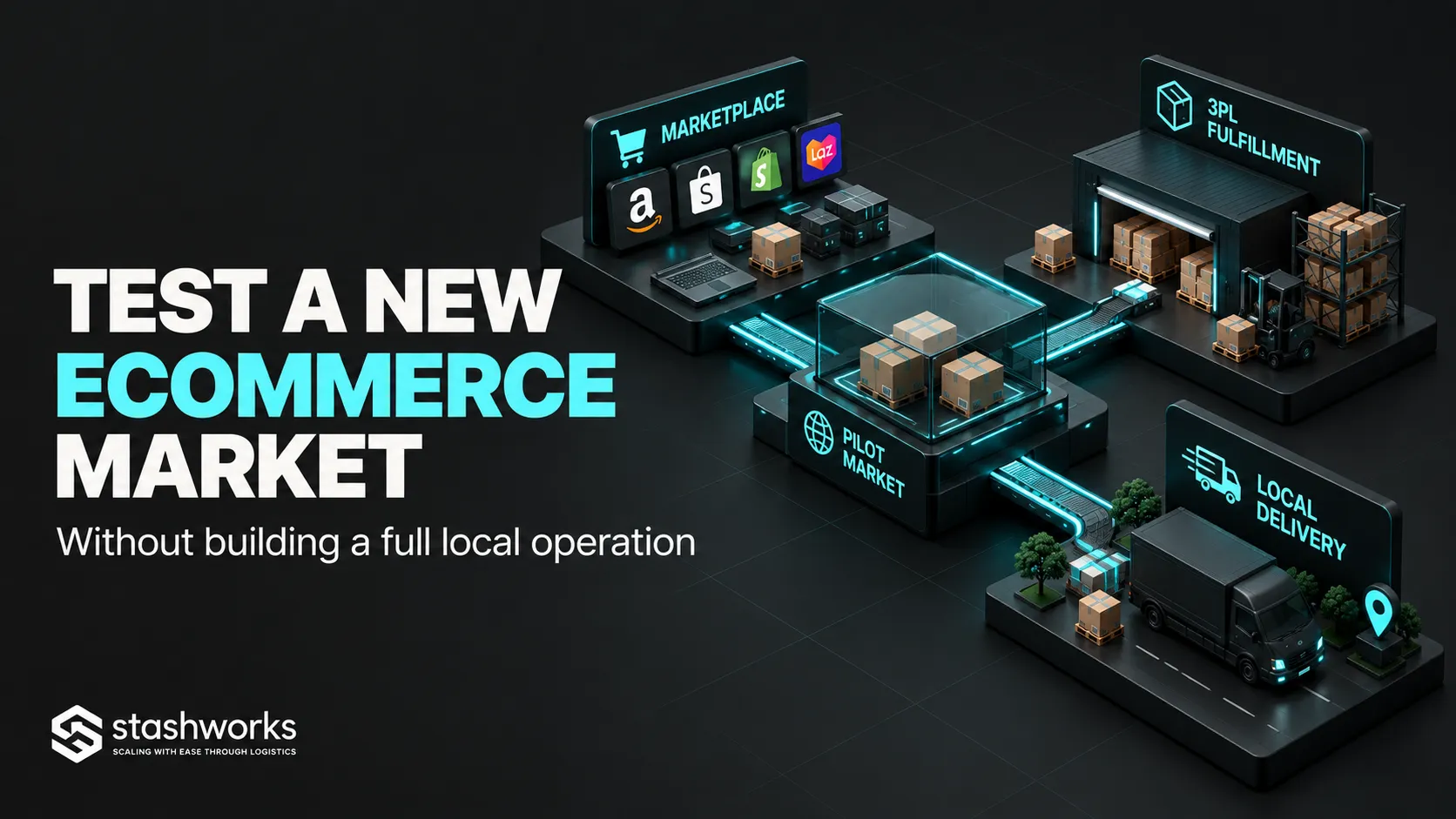
The strongest use case is often staged entry. The brand first validates whether the market, product, pricing and channels work. If demand becomes durable, the business can then decide whether to keep the outsourced structure, expand it, or invest in a larger independent local operation.
The decision should be driven by commercial evidence rather than the assumption that one market-entry structure is permanently superior.
What to prepare before discussing SOBAAS
Bring the target country, product catalogue, product category, current markets, desired sales channels, expected launch date, estimated order range, existing certifications or approvals, inventory plan, returns policy and any local partners already involved.
That information allows the provider to assess what can actually be supported and which questions need external legal, tax, import or regulatory confirmation before launch.
General information only: Sell-on-behalf structures can create legal, tax, customs and regulatory consequences that vary by country, product and contract. Confirm the proposed arrangement with the relevant authorities and qualified advisers.
Sources: Stashworks, Sell On Behalf As A Service; ACRA, Ways to set up foreign businesses in Singapore; Singapore Customs, Obtain a Customs Import Permit.