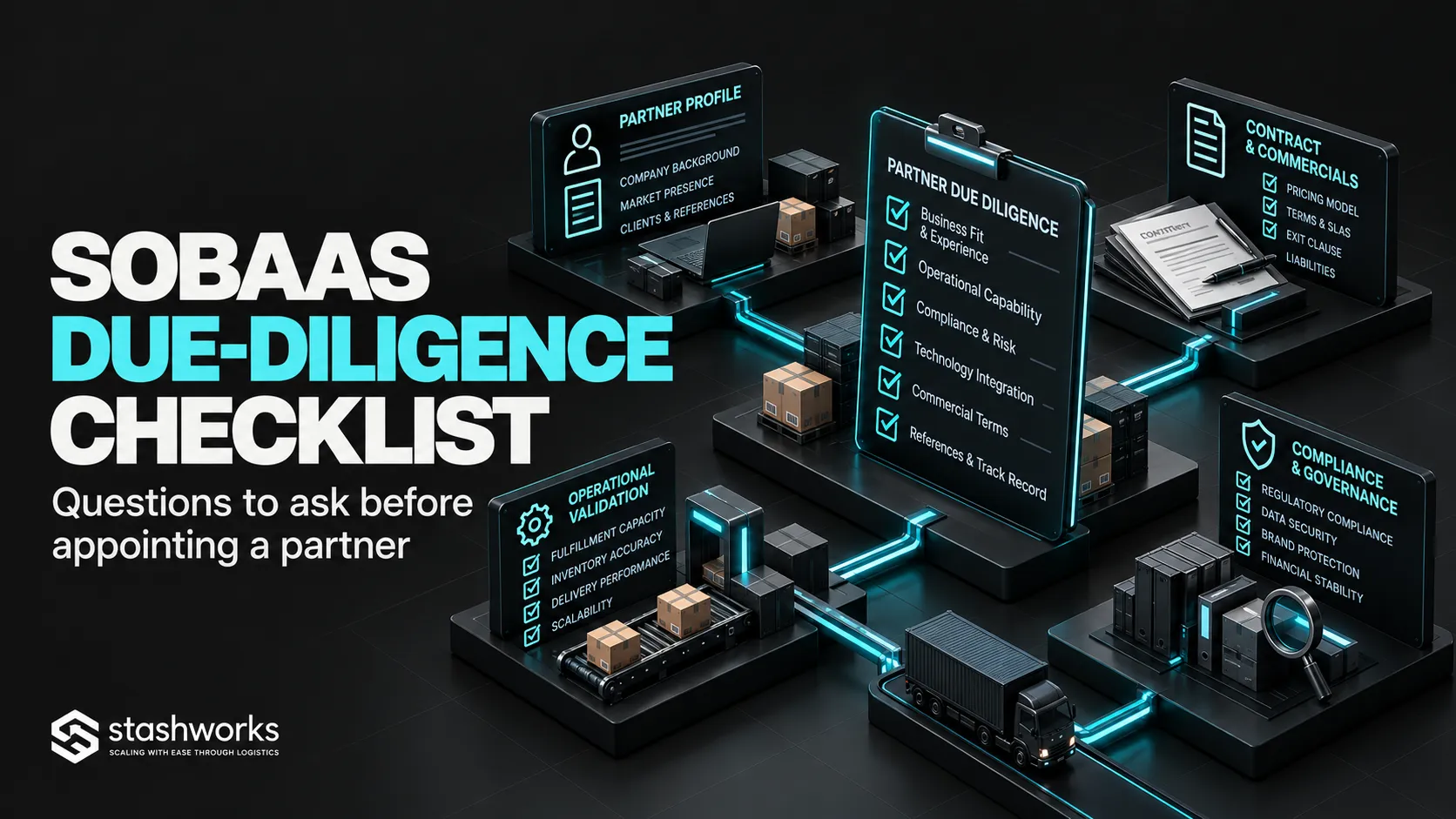
A sell-on-behalf partner can reduce the number of separate operational relationships a brand has to assemble for a new market. That convenience makes due diligence more important, not less, because the provider may sit across commercial setup, marketplace operations, inventory, fulfilment, delivery and customer support.
The goal is to make every responsibility visible before inventory moves or marketplace accounts are created.
1. Which markets do you actually support?
Ask for the countries currently available under the model and whether support is direct or delivered through local partners. Confirm the exact city or national coverage relevant to your fulfilment and delivery needs.
Stashworks currently lists Singapore, Malaysia and Thailand as available SOBAAS markets.
2. Is my product category eligible?
Provide the actual product catalogue, ingredients or specifications, claims and country of manufacture. Ask what categories the provider can support and which require external regulatory approval before onboarding.
A general statement that the partner supports “beauty” or “food” is not enough.
3. What is the legal selling arrangement?
Ask which party sells to the customer, which party appears on the marketplace, who receives payouts, who issues invoices where applicable and who carries customer refund obligations.
Obtain legal and tax advice on the proposed structure. Do not infer the consequences from the phrase “sell on behalf”.
4. Do I still need a local entity or registration?
The answer depends on the market, product and arrangement. Ask the provider which parts of local setup it reduces and which obligations remain with the brand.
Reject any generic promise that the model eliminates all entity, licence, tax or compliance requirements without conditions and supporting authority.
5. Who is the importer?
For local inventory, identify the importer of record or equivalent responsible party, who holds the required customs account or licence, who submits permits and who pays import taxes or duties.
Ask how shipment documents are prepared and who owns errors or delays caused by incomplete documentation.
6. Who owns product compliance?
Clarify whether the provider only coordinates information or actually holds any required product registrations, importer licences or responsible-party roles. Ask for evidence where the arrangement depends on a specific licence or registration.
The brand should maintain copies of its compliance evidence even when another party performs the local submission.
7. Who owns the marketplace accounts?
Confirm account ownership, admin access, payment accounts, advertising assets, reviews, listings and data. Ask what happens to those assets if the relationship ends.
A marketplace account can accumulate years of commercial value, so exit rights matter from the beginning.
8. What marketplace work is included?
Separate listing creation, catalogue maintenance, campaign setup, advertising support, pricing changes, customer messages and reporting. Define which activities are included, optional or excluded.
Stashworks currently describes product listings, marketplace management, campaign support and customer enquiries as possible parts of the SOBAAS marketplace-operation layer, subject to agreed scope.
9. Who approves pricing and promotions?
Define whether the partner can change prices or campaign discounts independently. Most brands should retain clear approval authority over commercial decisions that affect margin, positioning or contractual commitments.
10. How is inventory owned and recorded?
Document who owns stock at origin, in transit, after import, in storage and after customer return. Ask how damage, shrinkage, expiry where relevant and obsolete stock are treated.
11. Where is inventory physically stored?
Ask for warehouse location, storage conditions, security, access controls and whether any part of the operation is subcontracted. If products need temperature, dangerous-goods, batch, serial or other special handling, verify those capabilities explicitly.
12. How does receiving work?
Ask about booking, expected shipment data, quantity checks, condition checks, barcode issues, discrepancies, quarantine and how quickly approved stock becomes available for sale.
The receiving process is where many later inventory problems begin.
13. Which systems connect orders and inventory?
Confirm the supported sales channels, integration method, source of inventory truth, order status flow, cancellation handling and shipment updates. Test the failure cases, not only the happy path.
Stashworks currently lists integrations including Shopee, Lazada, TikTok, Amazon, Shopify, WooCommerce, eBay, BigCommerce, Magento and Zalora, while noting that availability for a specific SOBAAS market should be confirmed during setup.
14. What fulfilment activities are included?
Define storage, pick and pack, packaging materials, inserts, kitting, custom packing, returns processing and any project work. Ask which activities create additional charges.
15. How is last-mile delivery selected?
Understand courier options, tracking, failed delivery, proof of delivery, claims, return-to-sender and geographic coverage. Ask whether the provider uses one carrier or routes across several options.
16. What customer support is actually included?
Define channels, operating hours, languages, enquiry types, decision rights, refund authority and escalation. “Customer support included” is too vague to operate against.
17. What service levels will be measured?
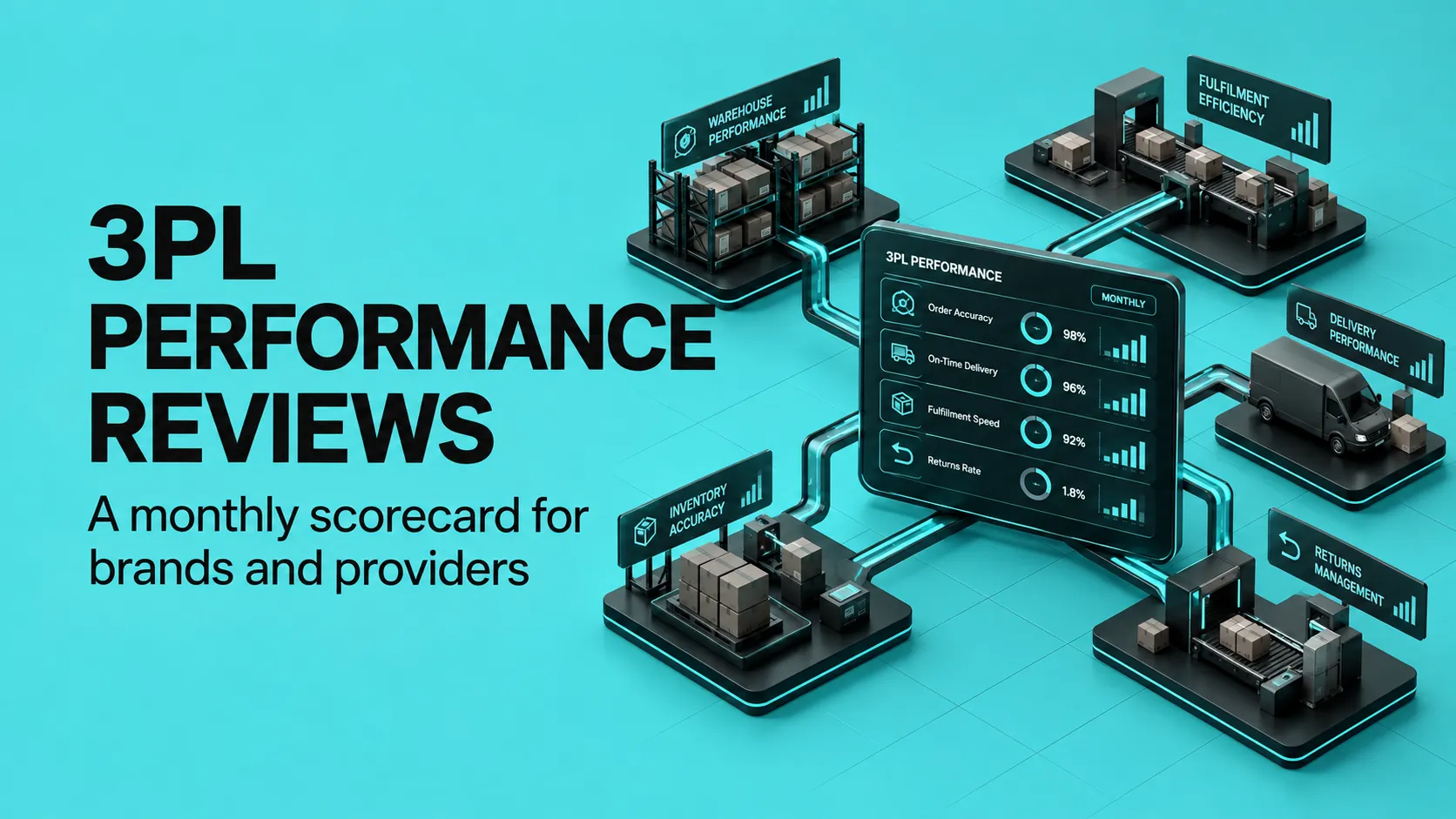
Agree metrics that correspond to the scope: receiving turnaround, inventory accuracy, order accuracy, processing time, dispatch performance, customer-enquiry backlog and return processing where relevant.
Do not rely only on a general promise of fast fulfilment.
18. What does the full commercial model cost?
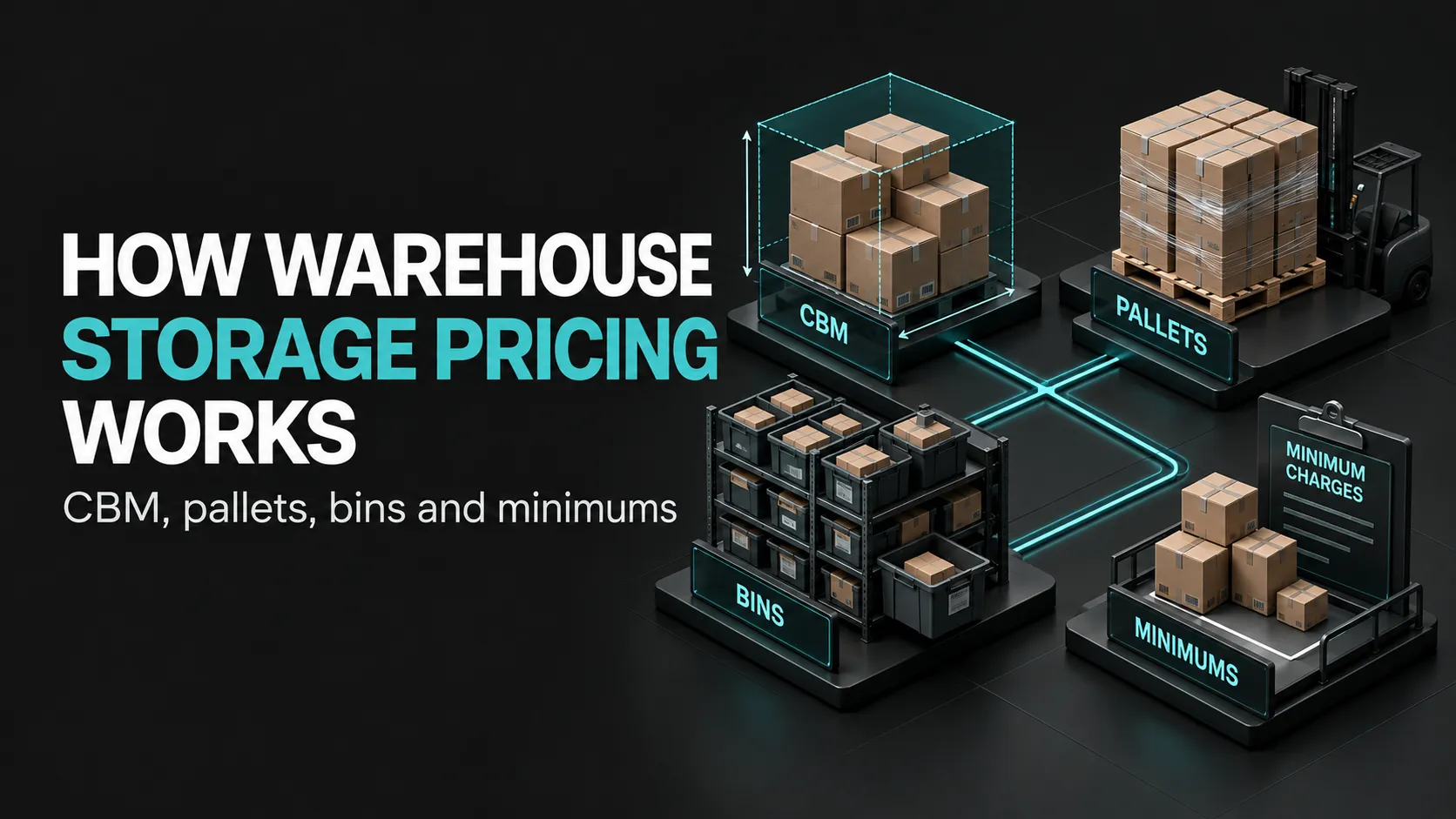
Ask for setup, project fees, marketplace-operation fees, storage, inbound handling, fulfilment, packaging, delivery, returns, customer support, integrations, minimum commitments and pass-through third-party costs.
Request assumptions beside every rate so quotes remain comparable.
19. How are marketplace funds reconciled?
Where the selling structure routes customer payments through another party, ask how settlements, refunds, fees, taxes and remittances are reported and reconciled. Define payment timing and the evidence the brand receives.
20. How is data handled?
Ask which customer, order and commercial data the provider can access, where it is stored, who can export it and what happens after termination. Use platform-supported role access rather than shared owner credentials where possible.
The detailed access framework is in Marketplace Account Access and Permissions.
21. Which activities are subcontracted?
A coordinated service can legitimately use specialist partners. The important issue is transparency: know which party stores stock, delivers parcels, manages the marketplace or performs regulated actions.
Ask how subcontractor performance and confidentiality are controlled.
22. What happens if the test underperforms?
Define the process for reducing inventory, closing listings, transferring stock, removing access and settling outstanding orders or returns. Ask about minimum terms, notice periods and termination charges.
23. Can the brand transition to its own local structure later?
A market-entry model should not make growth unnecessarily difficult. Ask whether marketplace assets, inventory, data and operating documentation can transfer if the brand later builds a local entity or changes provider.
24. What evidence can the provider show?
Request current facility information, relevant certifications, platform credentials where claimed, operating examples and references appropriate to the service. Verify evidence rather than relying on generic sales language.
Stashworks' live site currently states ISO 9001:2015 certification and displays recent Shopee Certified Enabler recognitions, but the relevance of any credential to the proposed country and scope should still be confirmed.
25. What must be verified before launch?
End due diligence with a written list of open items: entity position, tax, importer, product approvals, marketplace eligibility, inventory plan, integrations, customer policies and commercial terms. Assign an owner and due date to each.
A launch should not proceed simply because the operational pieces look ready while a legal or product requirement remains unresolved.
Turn the checklist into the statement of work
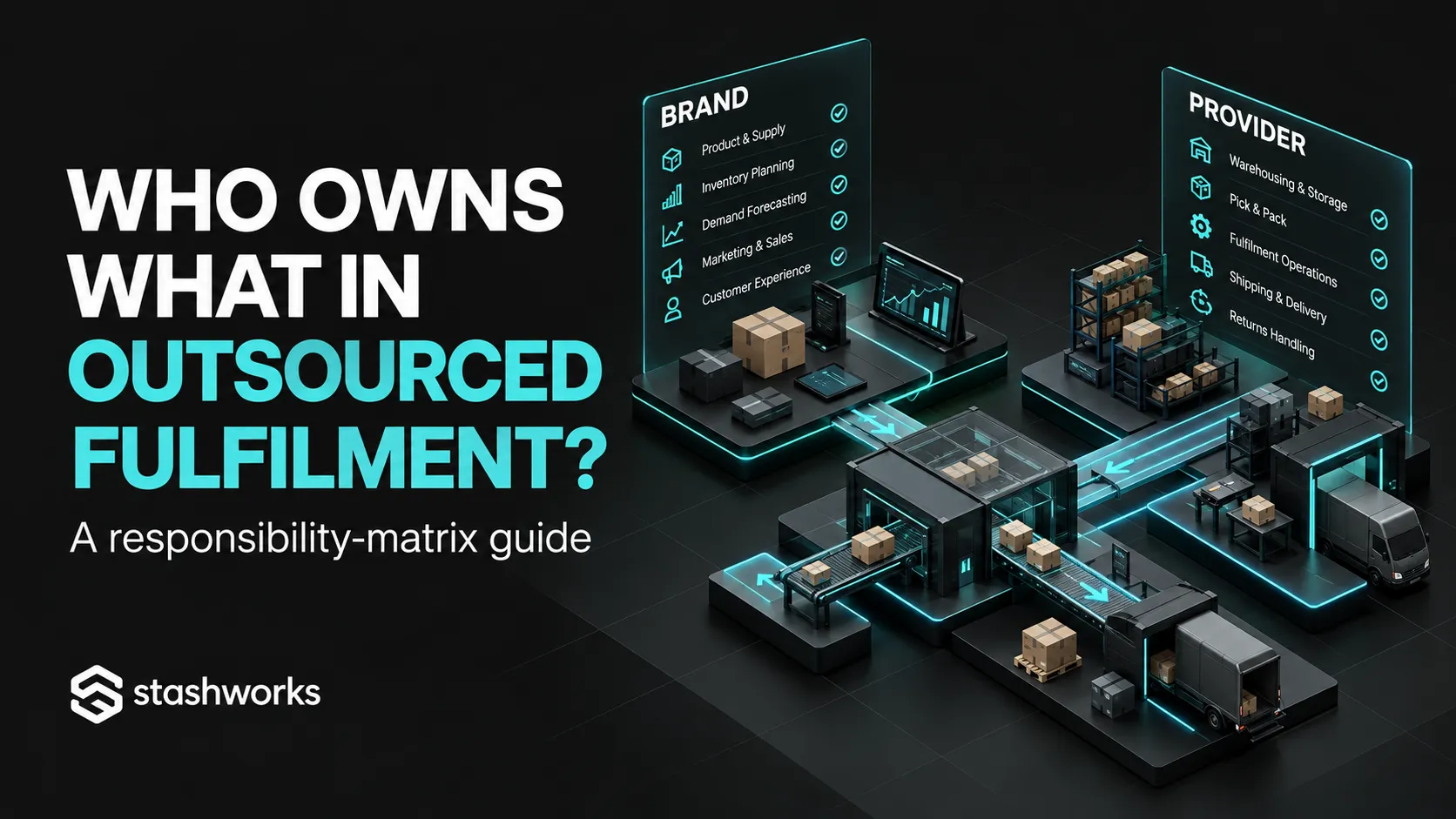
The best due-diligence answers should appear in the contract, responsibility matrix or operating procedure rather than remain in sales emails. That creates a shared reference for onboarding and later performance reviews.
General information only: A sell-on-behalf arrangement can create legal, tax, customs and regulatory consequences. This checklist is not legal or tax advice.
Sources: Stashworks, SOBAAS; ACRA, Foreign business setup options; Singapore Customs, Import Procedures Overview; ASEAN Trade Repository, Non-Tariff Measures.