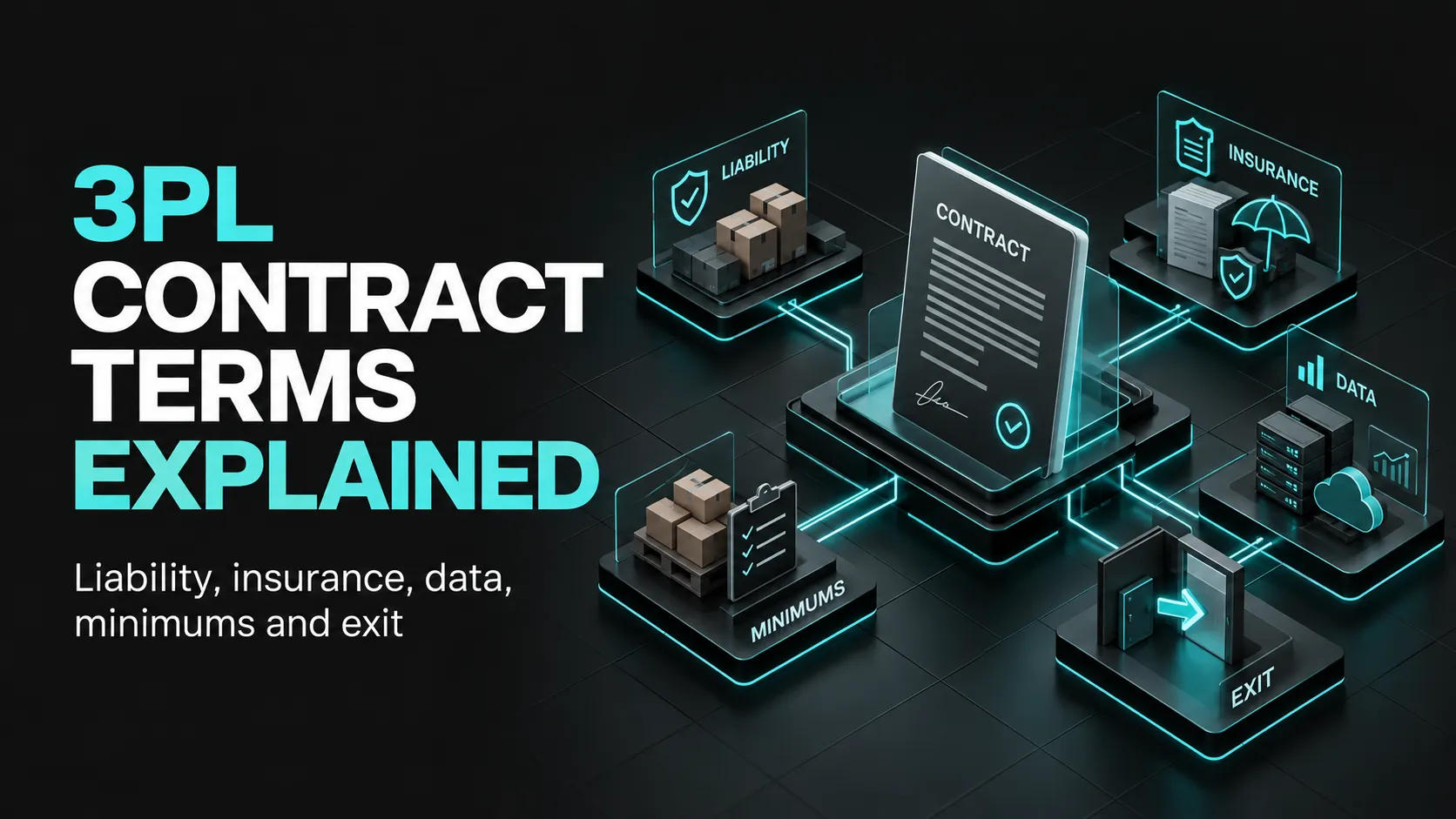
A 3PL contract is the operating rulebook for inventory, orders, data, payments and exit. The commercial proposal explains what the provider intends to do; the contract should define responsibilities, risk allocation and what happens when the normal process breaks.
Brands should review operational language alongside legal counsel rather than treating the agreement as a procurement formality.
Start with scope before liability
The contract should identify the actual services: receiving, storage, fulfilment, kitting, returns, freight, delivery, integrations, reporting and other work. If a service is not clearly in scope, it becomes difficult to argue about how it should have been performed.
Define the customer's responsibilities too
Many operational failures begin with late data, incorrect product information, unannounced inbound shipments or unsupported packaging requests. The agreement should define the information, approvals and forecasts the brand must provide.
Read limitation-of-liability clauses carefully
Liability clauses can cap recovery, exclude categories of loss or create different rules for negligence, data incidents, inventory damage and third-party carrier claims.
Singapore's Unfair Contract Terms Act places limits on certain exclusion and restriction clauses and applies a reasonableness test in specified circumstances. The effect of the Act depends on the contract and facts, so legal review is important.
Separate warehouse liability from carrier liability
A lost parcel after carrier handover may fall under a different liability regime from inventory damaged inside the warehouse. Define where responsibility transfers and which party manages carrier claims.
Understand insurance obligations
Ask which insurance each party is expected to maintain and whether inventory is covered by the provider's policy, the brand's policy or a combination. Confirm limits, deductibles, exclusions, valuation basis and claims procedure with the insurer or broker.
Do not assume “insured warehouse” means every customer's stock is fully insured for selling price.
Clarify inventory valuation
If goods are lost or damaged, the contract may define recovery using purchase cost, landed cost, replacement cost or another basis. The brand should understand this before relying on a liability limit.
Define data roles
Order fulfilment can involve customer personal data. The PDPC's guide to data protection clauses recommends adapting service agreements to define permitted processing, security, retention, incident handling and other responsibilities for personal data processed by a contractor.
Determine whether the 3PL acts as a data intermediary for specific processing and whether it also acts as an organisation for other purposes.
Address security and breach notification
Define access controls, security obligations, incident notification timing, investigation cooperation and deletion or return of data at exit. Operational teams should know the notification route before an incident occurs.
Check subcontracting rights
Warehousing, carriers, software, freight or specialised services may involve subcontractors. The agreement should state when subcontracting is permitted, what oversight applies and whether the brand needs notice or approval.
Make minimum commitments visible
Minimum monthly fees, storage commitments, order minimums, implementation fees or minimum contract terms can materially affect the economics. Ask for them in the pricing schedule rather than allowing them to sit only in general conditions.
Define how rates can change
Contracts should explain review dates, indexation, carrier pass-through charges, new-service pricing and how the brand is notified before a new rate applies.
Link service levels to the operating rules
An SLA should define what is measured, the starting point, exclusions and reporting source. If a service credit or remedy applies, make sure it references the same metric definition.
See 3PL Service-Level Agreements for the operational framework.
Define inventory-count and discrepancy procedures
Set out cycle counts, stock investigations, write-off authority and how variances are reported. The contract should not leave the parties to invent the process after a discrepancy appears.
Address change control
New marketplaces, packaging, integrations, countries or value-added work can change cost and risk. Define how scope changes are approved and documented.
Read the termination clause before onboarding
Notice period, termination for cause, unpaid balances, stock-release conditions and final charges can determine how quickly the brand can leave.
The exit plan should cover inventory reconciliation, data export, marketplace and system access, packaging materials, returns still in progress and open orders.
Protect data and operational records at exit
The PDPC's managing-data-intermediaries guidance specifically includes exit management. Confirm what customer and order data is returned or deleted, how long backups remain and how access is revoked.
Do not infer Stashworks contract terms from public pages
Stashworks' website explains its service scope and pricing factors but does not publish universal liability limits, insurance terms, minimum commitments or termination terms. These need to be confirmed in the actual agreement for the specific account.
General information only: Contract, insurance and liability issues require professional legal and insurance advice. This article is not legal advice and does not state Stashworks' contractual position.
Sources: Singapore Statutes Online, Unfair Contract Terms Act 1977; PDPC, Guide on Data Protection Clauses; PDPC, Guide to Managing Data Intermediaries; Stashworks, 3PL Singapore.