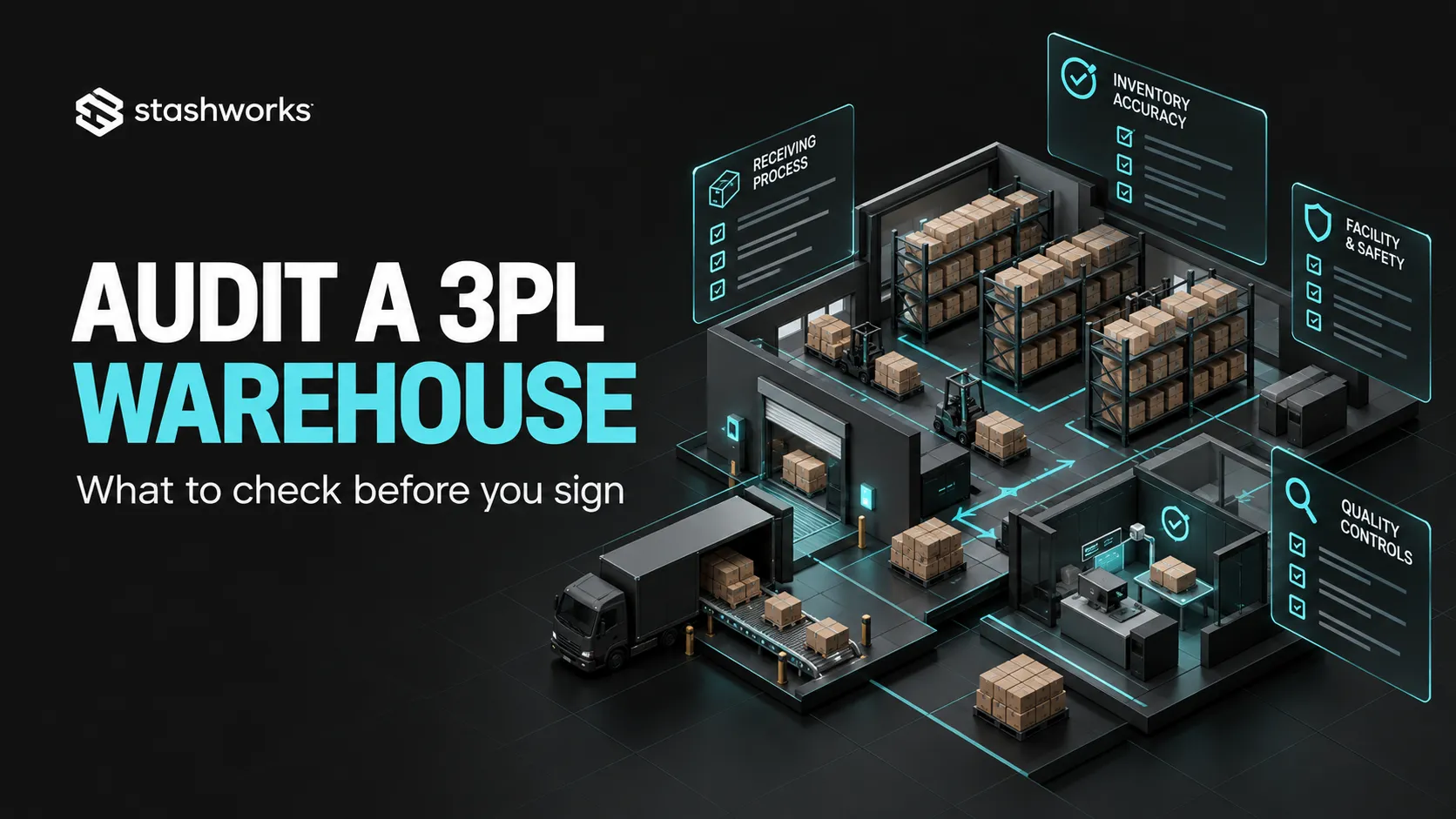
A warehouse tour can look impressive without proving that the operation will work for your catalogue. The purpose of a 3PL audit is to follow your inventory and order journey through the facility and test whether the controls match your business.
Arrive with a checklist built from your own SKUs, order profile and channel requirements.
Start at the inbound door
Ask how shipments are booked, what advance information is required, how cartons or pallets are identified and what happens when the physical delivery does not match the expected shipment.
Look for a controlled path from unloading to receiving, discrepancy handling and approved putaway.
Inspect the receiving verification process
Ask how SKU, quantity, barcode and condition are checked. For products with similar variants, see how the warehouse prevents one item from being received under another SKU.
Stashworks' current warehousing pages describe inventory being received and recorded into the warehouse system before storage and fulfilment.
Check quarantine and exception areas
Damaged, unidentified, returned or discrepant stock should not sit inside ordinary saleable inventory. Ask how non-saleable states are physically separated and represented in the system.
Inspect storage against your product requirements
Check whether the proposed storage environment suits dimensions, weight, sensitivity, security and handling requirements. If the provider claims AC, ambient or other storage capability, confirm which products and areas the claim applies to.
Stashworks publicly describes AC and ambient warehouse capacity; suitability for a specific SKU still needs confirmation.
Trace a pick path
Ask the operator to show how an order becomes a picking instruction, how the location is identified and how the correct SKU is verified.
Stashworks' current technology page describes system-generated picking and QR-based product verification in its WMS workflow.
Inspect packing controls
Observe where item verification, packaging selection, inserts, labels and final shipment checks occur. If your products need bespoke packaging or kitting, ask to see the process rather than relying on a rate card.
Check order-exception handling
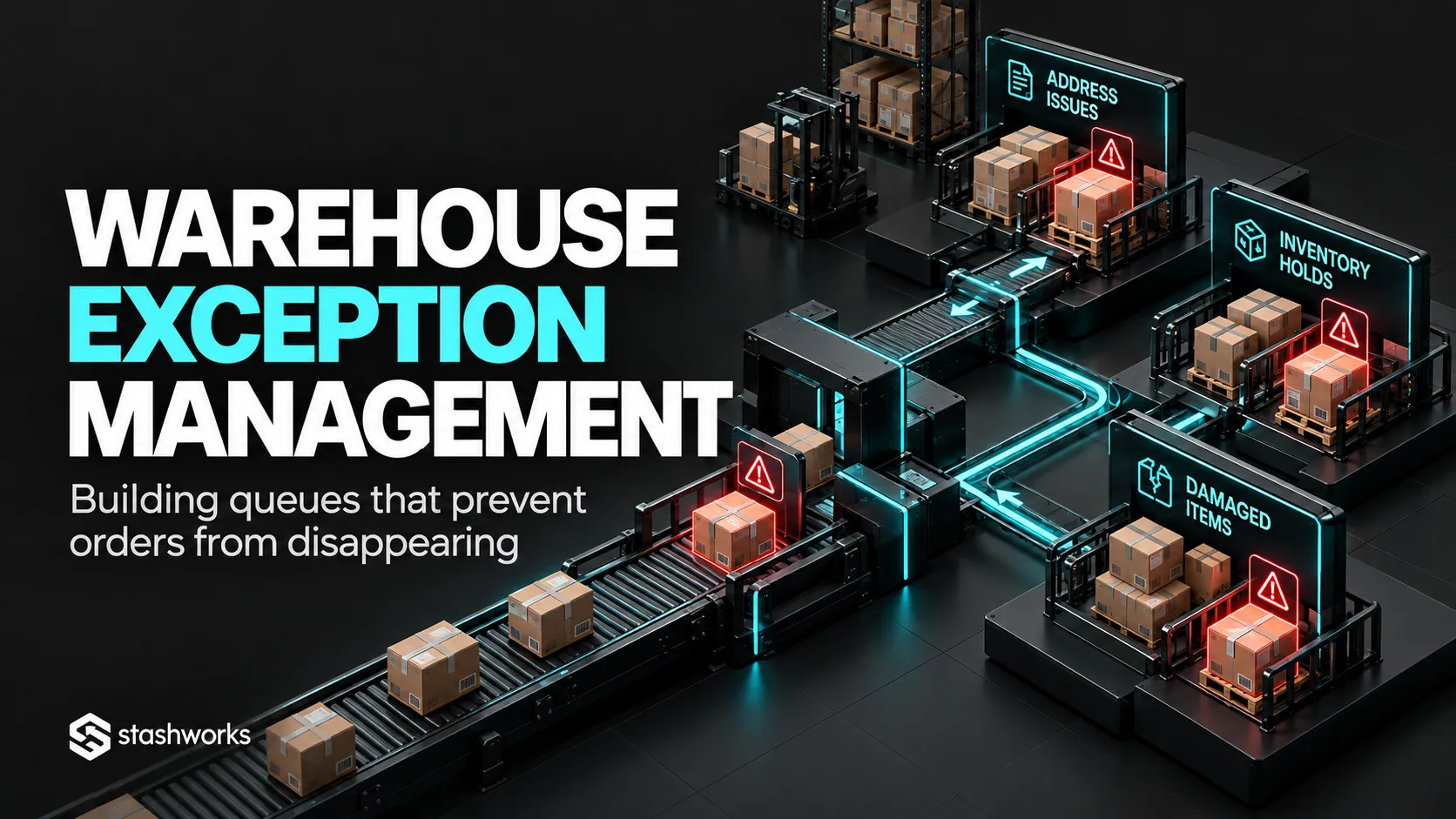
Ask what happens when an SKU is missing, barcode does not scan, address is invalid, order is cancelled after release or the integration fails. Exception handling is often more revealing than the standard pick-pack path.
Inspect inventory-count controls
Ask how cycle counts are planned, discrepancies are investigated and write-offs are approved. Look for a process that preserves evidence rather than simply changing the quantity until systems agree.
Review the WMS and client visibility
Ask to see the information a customer actually receives: inventory, order status, tracking, reports and alerts. Confirm whether the demonstration matches the package you would buy.
Stashworks currently describes real-time inventory visibility, order management, WMS workflows and replenishment alerts.
Review integrations using your real channels
Do not stop at an integrations-logo page. Ask how orders, inventory, cancellations and tracking move for your specific Shopify, Shopee, Lazada, TikTok Shop, Amazon or custom setup.
Inspect physical security
Review visitor access, restricted areas, CCTV where applicable, keys or access control, high-value inventory handling and how the provider records who can enter operational areas.
Ask about people and training
Understand who supervises your account, how new staff are trained, how seasonal labour is introduced and how process changes are communicated to the floor.
Inspect returns processing
Trace the path from returned parcel to identification, inspection, disposition and system update. Returned goods should not automatically rejoin sellable inventory.
Ask how peaks change the warehouse
Request the peak-volume plan: extra labour, packing stations, replenishment, carrier collections and escalation. A warehouse that works at average volume may still fail during campaign periods.
Review business-continuity controls
Ask about facility disruption, system outage, carrier disruption and critical supplier failure. The answer should include recovery priorities and tested procedures, not only “we have a BCP”.
Use 3PL Risk Management to structure the questions.
Check quality evidence
Request current certifications relevant to the operation and ask how the management system appears in daily processes. Stashworks' live site currently states ISO 9001:2015 certification, but any certification should be verified for current scope and validity before relying on it.
Audit governance after the physical tour
Meet the team that will manage the account. Review reporting, escalation, change control and service-review cadence. The warehouse floor and the commercial relationship need to work together.
Leave with open items, not impressions
Record every unanswered question, evidence request and required change. Assign an owner and due date before final provider selection.
The strongest audit result is not “the warehouse looked good”; it is a documented view of whether the facility, systems and operating controls fit your requirements.
Sources: Stashworks, 3PL Singapore; Stashworks, Warehousing; Stashworks, Technology.