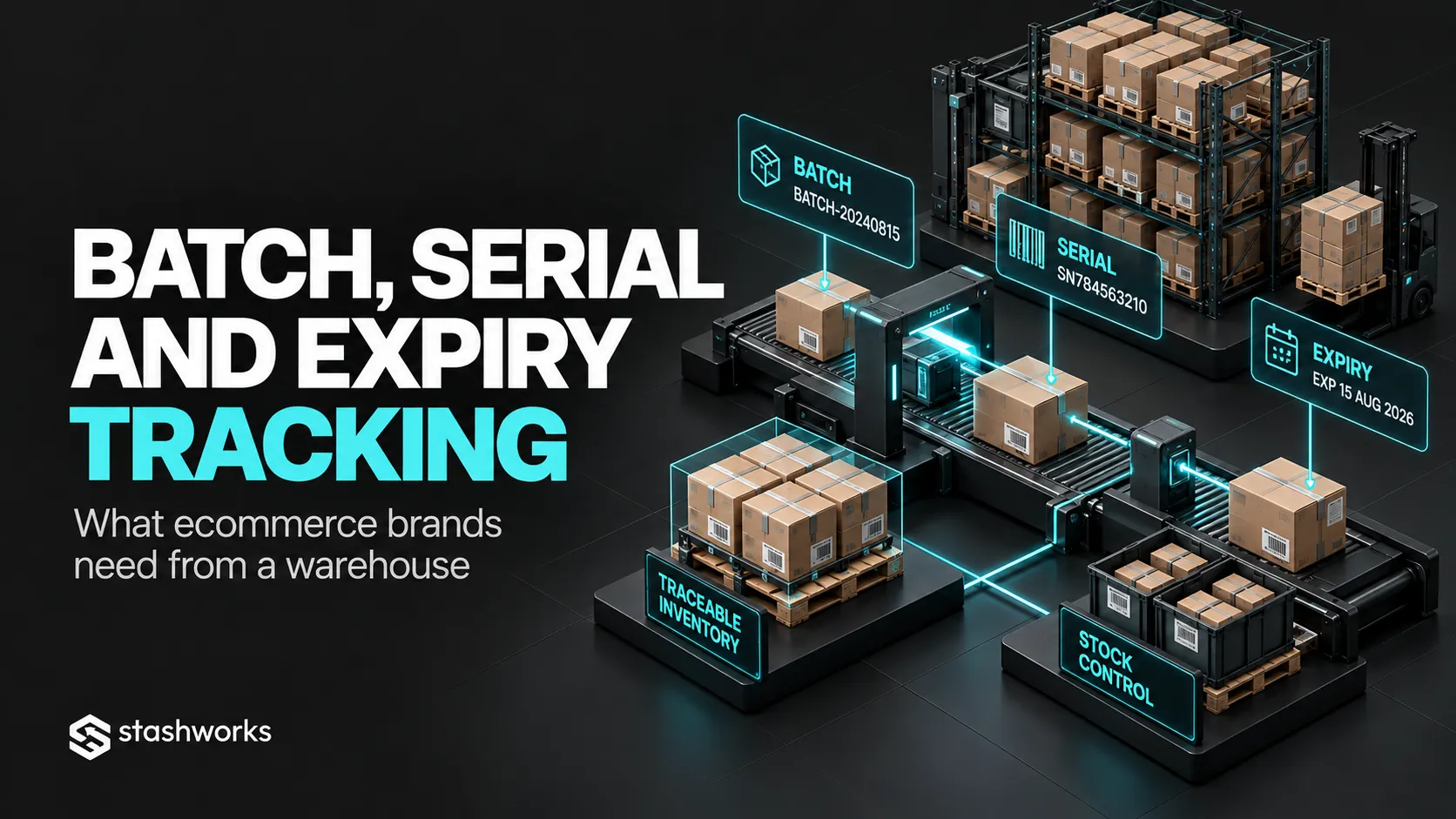
Batch, serial and expiry tracking add another identity layer to warehouse inventory. A SKU tells the warehouse what the product is. Batch, lot, serial and expiry data can identify which production group or individual unit is being stored, shipped or returned.
Brands should only require the tracking depth their products and compliance obligations need, but when traceability matters it must be designed into receiving and fulfilment from the start.
Understand the difference between batch and serial tracking
A batch or lot groups multiple units that share a production or manufacturing reference. Serial tracking gives an individual unit its own unique identifier.
Both can sit underneath one SKU, but they answer different questions during investigation.
Expiry tracking adds time to the identity
Products with expiry, best-before or use-by dates may need the warehouse to capture dates at receipt and apply stock-rotation rules during allocation.
The exact rule depends on product category, contractual requirements and applicable regulation.
Define what must be captured at receiving
For each relevant SKU, specify whether the warehouse records batch, serial, manufacturing date, expiry date or another attribute. Decide whether capture happens per unit, carton or pallet.
If suppliers provide unreadable or inconsistent markings, receiving becomes the point where traceability can break.
Make the physical label scannable where possible
Manual entry of long serial or batch values can create errors. Where product packaging and standards allow it, a scannable data carrier can reduce transcription.
GS1 standards support identifiers and application identifiers that can encode product and additional traceability data in appropriate barcode types.
Separate traceability data from the SKU
Do not create a new SKU for every batch unless the commercial product itself is different. The SKU should identify the sellable item; the batch or serial identifies the specific production group or unit.
Use allocation rules intentionally
FIFO sends older received stock first. FEFO prioritises stock with the earliest expiry date. They are not the same rule.
For expiry-sensitive products, FEFO can be more appropriate because two batches received at different times may have different remaining shelf life.
Define minimum remaining shelf life
Some customers or channels may require a minimum remaining shelf life at dispatch. If so, define the threshold and the action when inventory falls below it.
Do not allow near-expiry stock to remain technically “available” if the customer promise makes it unsellable.
Track status and traceability together
A batch can be physically present but quarantined. A serialised unit can be damaged. The WMS needs both the identity and the inventory status.
The state framework in Inventory Statuses Explained helps separate availability from physical existence.
Test picking rules
Create orders that require the warehouse to select the correct batch, serial or expiry range. Verify the WMS guides the worker and blocks invalid selections where the operation requires it.
Preserve the shipped traceability record
After dispatch, the business should be able to identify which batch or serial was shipped on a specific order where that level of traceability is required.
This record is essential for targeted investigation, warranty work or recall.
Returns need the same identity controls
When serialised goods return, confirm the serial matches the original or authorised transaction where relevant. For batch- or expiry-controlled products, returned stock may require additional inspection before it becomes saleable.
Build a mock recall test
Select one batch and test whether the business can identify remaining inventory, affected orders and current locations. Then test whether the warehouse can block that inventory from further allocation.
The exercise reveals whether traceability exists in practice rather than only in configuration.
Handle damaged labels and missing data as exceptions
A missing batch or unreadable serial should not be resolved by guessing. Define quarantine and investigation procedures.
Keep supplier data aligned
If batch information arrives on an ASN, purchase order or supplier file, compare it with what is physically scanned at receipt. The warehouse should record the actual received identity rather than forcing the physical goods to match an incorrect document.
Define retention requirements
How long traceability records must be kept can depend on product regulation, warranty, contract and business policy. Confirm the required retention period with the relevant legal or compliance advisers.
Confirm the 3PL supports the required control
Stashworks' public pages describe inventory and WMS-supported warehouse operations but do not state a universal batch, serial or expiry capability for every product type. Brands requiring these controls should confirm them during solution design before stock moves.
General information only: Traceability and expiry requirements can be regulated by product category. Confirm the applicable legal and product requirements for the markets in which you operate.
Sources: GS1 General Specifications; Microsoft Learn, Batch and Serial Confirmation; Stashworks, Warehousing.