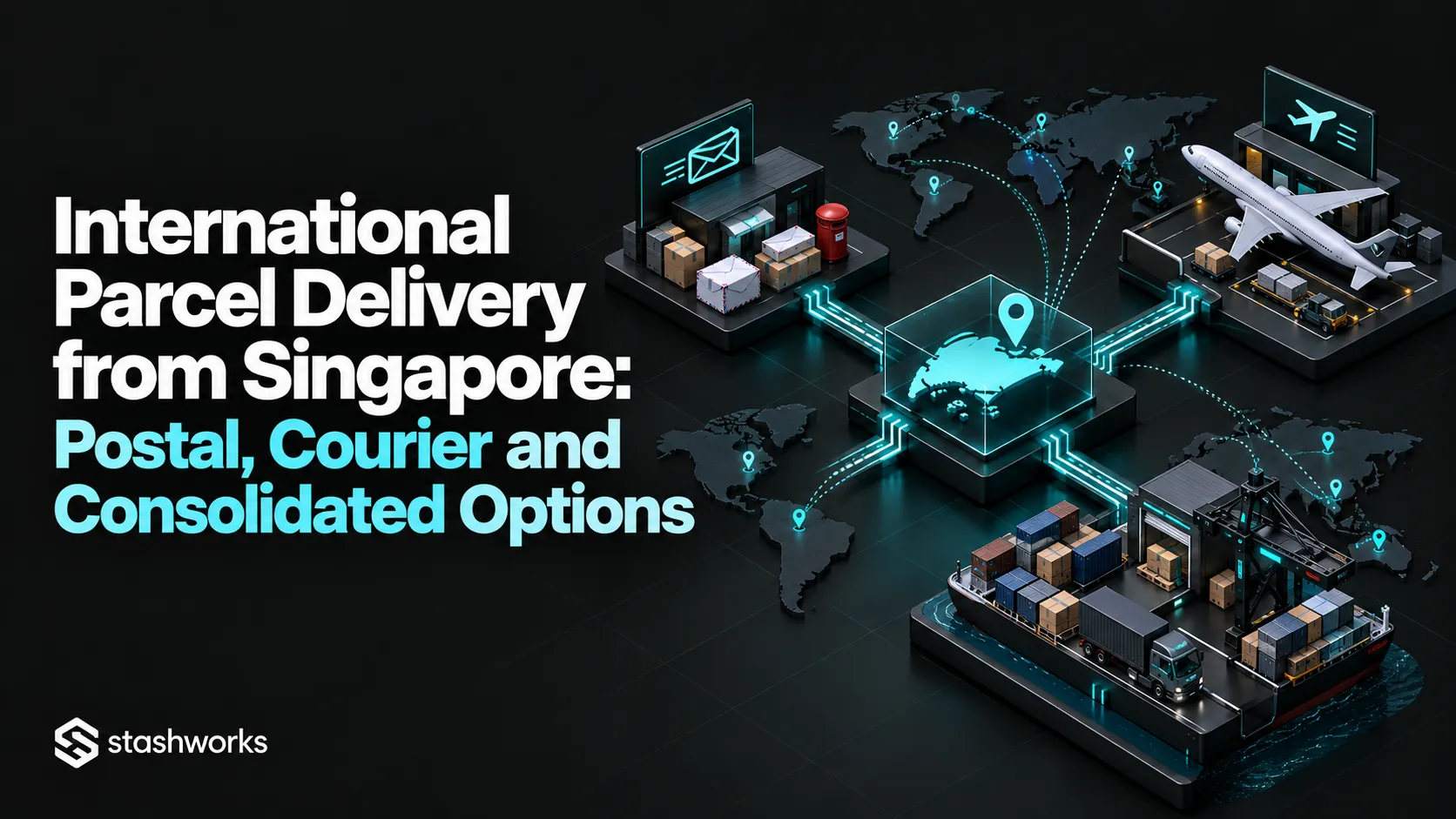
International parcel delivery from Singapore can follow very different operating models. A low-value lightweight parcel can move through a postal network; a time-sensitive order can use express courier; a higher-volume shipper can consolidate many parcels into one cross-border line-haul before they are injected into a destination delivery network.
The best option depends on customer promise, destination, parcel profile, customs complexity, tracking requirements and shipment volume.
Postal services prioritise broad network access
Postal products are often suitable for lightweight, lower-value or less time-sensitive shipments. SingPost currently offers international airmail, registered mail and Speedpost services with different tracking, weight, size and service characteristics.
Always check the destination-specific service rather than assuming one universal transit time.
Express courier prioritises speed and integrated tracking
Express networks such as DHL, FedEx and UPS typically combine pickup, export handling, international line-haul, destination customs coordination and last-mile delivery inside one network or controlled partner structure.
That can simplify visibility, but the cost per parcel can be higher than deferred or postal options.
Consolidated parcel models combine many orders for line-haul
In a consolidated model, multiple individual parcels are grouped for the international journey, cleared or processed according to the service design, then separated for destination delivery.
DHL describes cross-border direct-injection and breakbulk models where parcels can move together before entering the destination network.
Consolidation works best with repeat volume to the same market
The model becomes more useful when a shipper has enough parcels to one country or region to justify a scheduled consolidated movement.
Low or irregular volume may be better served by postal or standard courier services.
Compare delivery promise by destination
A service that is competitive to Malaysia may perform differently to Europe or the United States. Build a lane matrix rather than choosing one international service for every country.
Include remote-area coverage and collection-point options where relevant.
Compare tracking depth
Some postal products have limited tracking compared with courier services. Express and consolidated commercial networks can provide more frequent events, but event definitions still vary.
Test how tracking appears in the customer's sales channel, not only on the carrier website.
Customs declarations are mandatory for international postal parcels
SingPost requires customs declarations for international package and Speedpost services. Shipment content, value and sender/recipient information need to be accurate.
Incomplete or inaccurate declarations can cause delay or return.
Commercial invoices may be required
Destination-country requirements vary. SingPost currently requires a commercial invoice for parcels above specified value thresholds in its own process, while couriers can require invoices or electronic customs data according to destination and service.
Use the current carrier guidance for the lane.
Check prohibited and dangerous goods before rate shopping
Liquids, batteries, perfumes, aerosols and other products can be restricted or require specialised handling. A cheap service is irrelevant if the product cannot legally travel through that network.
Check both origin carrier rules and destination import requirements.
Parcel size can change the economics
Couriers can price against actual or dimensional weight. Large lightweight products may therefore cost more than their scale weight suggests.
Use Dimensional Weight Explained before comparing parcel services.
Postal and courier liability differ
Standard compensation limits can be much lower than the retail value of a high-value order. SingPost publishes limited standard compensation for its international Speedpost services and offers optional enhanced liability for eligible shipments.
Courier liability and claim rules also vary by service and contract.
Returns must be considered at selection stage
A fast outbound service can still create a poor customer experience if there is no economical return route. Compare local return labels, customer-paid returns, consolidation and local disposal or recovery options.
Measure cost per successful delivered order
Include freight, fuel or service surcharges, dimensional-weight impact, customs administration, failed delivery, redelivery, claims and returns.
The cheapest first-mile quote may not produce the lowest total cost.
Use service segmentation
A brand can offer economy postal or deferred delivery for low-value orders, express courier for urgent or high-value orders, and consolidated services for high-volume international lanes.
The customer promise should determine the service rather than an internal desire to use one carrier for everything.
Connect international delivery to fulfilment data
The warehouse needs correct customs data, product descriptions, values, HS codes where required, destination and carrier service. Tracking should return to the ecommerce channel after shipment creation.
Where Stashworks fits
Stashworks' Freight Forwarding and Ecommerce Fulfilment services can connect outbound preparation with logistics coordination. The exact international parcel, postal, courier or consolidation options and destination coverage should be confirmed for the proposed lane.
Sources: SingPost, Sending Overseas; SingPost, Customs Declaration; DHL eCommerce, Parcel Connect.