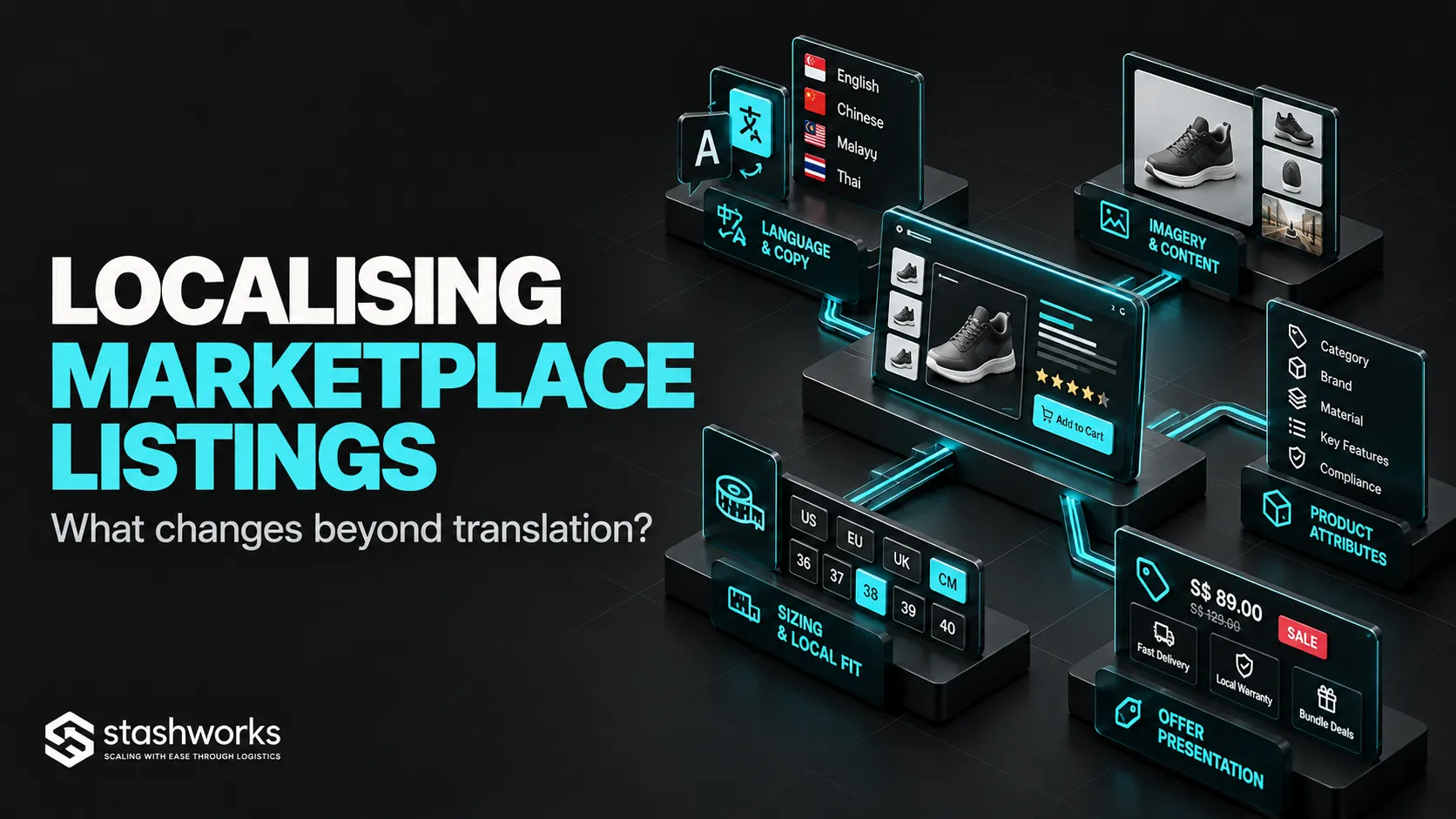
Translation changes language. Localisation changes how a product is understood, discovered and purchased in a specific market without changing the underlying product facts.
For Southeast Asian ecommerce, that can affect titles, units, pack sizes, imagery, search terms, variants, promotions, delivery information, customer-service wording and the way regulated claims are presented.
Keep one master product record underneath every local listing
Before adapting content, define the stable data that should not drift by country: internal SKU, barcode, variant identity, physical dimensions, weight, pack quantity, approved ingredients or specifications and regulated claims.
Local listings can change merchandising without creating a different warehouse identity.
Translate product meaning, not only words
Literal translation can produce language that is technically correct but commercially unnatural. Product benefits, category terms, material names and usage instructions should match how customers in the target market actually search and speak.
Use native or market-experienced reviewers for customer-facing copy where language matters.
Adapt the title to platform rules
Every marketplace has its own title structure and restricted-content rules. TikTok Shop Singapore's current listing guidance says titles should be complete, accurate and concise and may include brand, product type, material or ingredient, key characteristics and quantity or volume.
Use the relevant country's current Seller Center guidance rather than copying a title from another platform.
Use locally familiar units and pack descriptions
Customers should not have to convert measurements mentally. Check weight, volume, dimensions, clothing sizes, electrical specifications and pack quantity.
Where the physical packaging uses a different unit system, present the information clearly without contradicting the label.
Localise variant names carefully
Colour, size, scent and pack names should make sense locally while still mapping to the same internal SKU. Avoid creating a local variant label that makes two different products appear identical inside the warehouse.
Adapt imagery to the market without misrepresenting the product
Hero images, lifestyle photography, callouts and information graphics can be localised for audience and climate, but the image must still represent the item the customer will receive.
Do not show pack quantities, accessories or claims that differ from the fulfilment SKU.
Review cultural and seasonal context
Promotional calendars, gifting occasions, religious or cultural events and seasonal demand differ by country. Adapt campaign content and merchandising to the local calendar instead of exporting the home-market campaign schedule unchanged.
Keep sensitive cultural references under local review.
Localise search terms separately from brand language
The phrase customers type may not match the brand's preferred wording. Build a keyword set from local marketplace search behaviour, competitor listings and customer-service language.
Use those terms naturally in the fields the platform supports without keyword stuffing.
Show local pricing and value clearly
Display prices in the marketplace's required currency and explain bundle quantities, subscription terms or promotional mechanics clearly. A discount structure familiar in one market may confuse customers elsewhere.
Pricing decisions should also account for local tax, fulfilment and marketplace costs rather than using a simple currency conversion.
Make delivery information market-specific
Update dispatch expectations, delivery windows, collection options, geographic restrictions and return instructions to reflect the actual local operation.
Do not copy a delivery promise from another country if the warehouse and carrier setup is different.
Localise customer-service wording
FAQs, automated replies and escalation templates should use the same product terms customers see in the listing. The support team should also understand local order statuses, delivery terminology and marketplace policies.
The workflow in Marketplace Customer Service Operations can be adapted to the target market.
Do not “localise” regulated claims casually
A copywriter should not strengthen a claim simply because it converts better in the local language. Health, safety, performance, ingredient and certification statements need to remain within the approved evidence and local regulatory framework.
Route sensitive claims through product or compliance approval.
Check whether labels and listings must match
Where local law requires specific product information on packaging, make sure the marketplace description does not contradict the physical label. A listing should not create a customer expectation that the delivered product cannot support.
Adapt content by channel, not only by country
The same Singapore product can need different presentation on TikTok Shop, Shopee, Lazada, Amazon and a Shopify storefront. Channel-specific fields, media formats and customer behaviour differ even within one country.
Maintain a country layer and a channel layer in the catalogue rather than overwriting the global master record.
Use controlled approvals for local changes
Define which fields the local operator can edit independently and which require brand approval. Product identity, regulated claims and pricing authority often need stronger controls than routine merchandising copy.
Measure whether localisation improves outcomes
Track conversion, search visibility where available, listing rejection, customer questions, return reasons and content-related support issues. A localisation change should solve a real customer or platform problem, not simply create more versions of the catalogue.
Where Stashworks fits
Stashworks' Ecommerce Enablement service includes listing creation, product and variant setup, catalogue maintenance and campaign support. Within SOBAAS, those marketplace activities can form part of the agreed market-entry operation.
The brand should still provide approved product information and define which localisation decisions can be made by the operating partner.
General information only: Localisation does not override product, advertising, labelling or marketplace compliance requirements. Verify regulated claims and mandatory information for the target country and platform.
Sources: TikTok Shop Singapore, Product Titles, Descriptions, Images & Videos; Stashworks, Ecommerce Enablement; Stashworks, SOBAAS.