
A Shopee seller can fulfil the same customer order through three very different operating models: keep the work in-house, outsource it to an independent 3PL, or use Fulfilment by Shopee where the programme and products are eligible.
The customer still sees an order on Shopee. Behind that order, however, responsibility for receiving, storage, inventory control, picking, packing, dispatch and returns can sit with very different teams. The useful comparison is therefore not simply “Which option is cheapest?” It is which operating model fits the way the business sells, grows and manages inventory.
In-house fulfilment keeps the warehouse responsibility with your team
With an in-house model, the seller receives stock, stores it, processes Shopee orders, picks and packs parcels, hands them to the appropriate logistics flow and handles inventory discrepancies and returns.
The advantage is direct control. The same team can change packing rules, inspect products or prioritise orders without coordinating with an external provider.
The trade-off is that the business also owns the fixed capability behind the parcel: space, people, equipment, stock accuracy, peak labour, packaging, process design and operational cover when key staff are unavailable.
An independent 3PL turns fulfilment into a managed service
In an independent 3PL model, the seller still owns the products and commercial decisions, while the provider performs agreed warehouse activities. Those can include receiving, storage, inventory management, pick and pack, dispatch and returns.
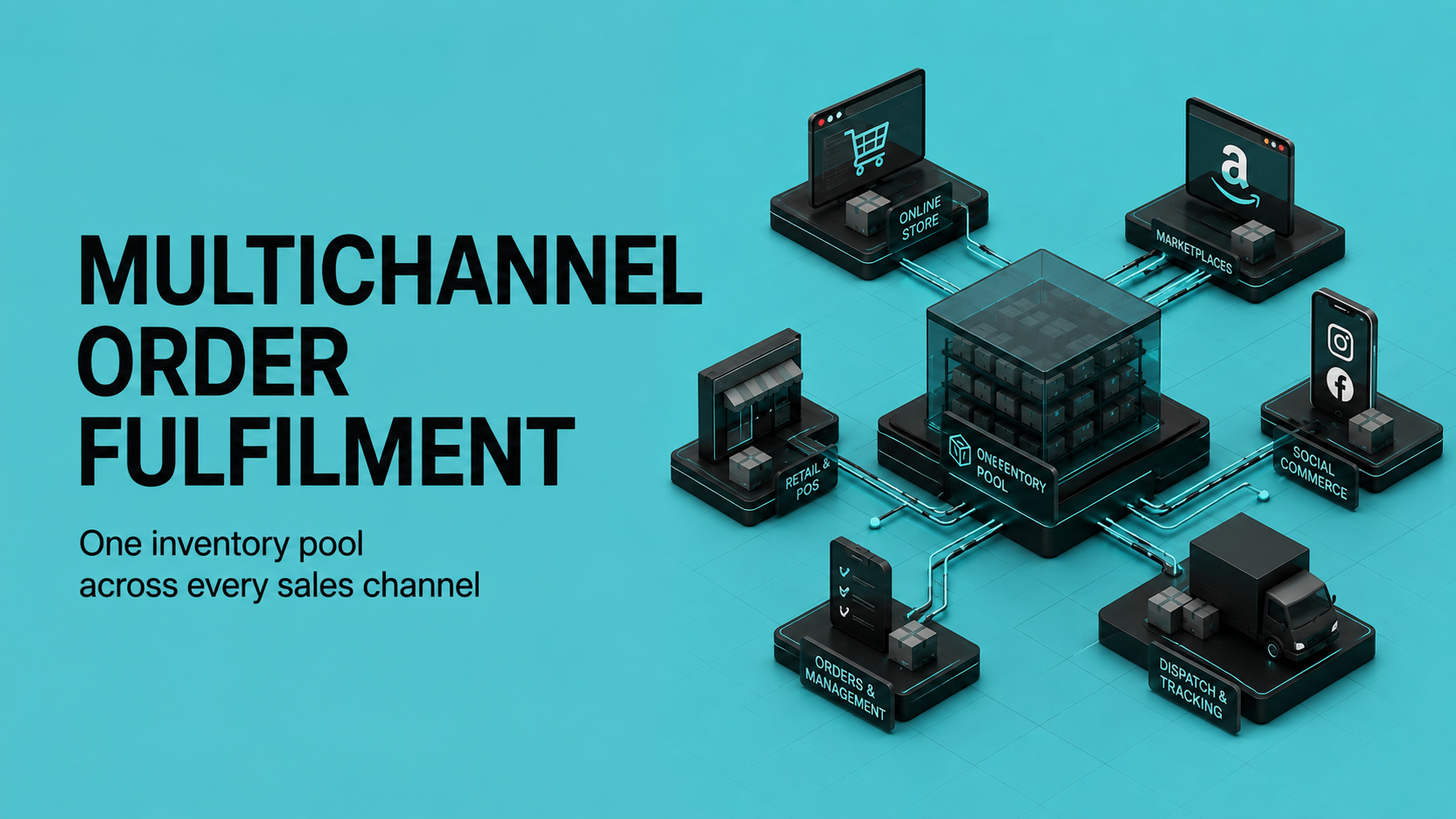
This can be particularly useful when Shopee is only one of several sales channels. A brand selling through Shopify, Lazada or TikTok Shop may prefer one operational inventory pool and one warehouse process rather than building a separate fulfilment model for each marketplace.
Stashworks currently lists Shopee among its supported integrations. Its ecommerce fulfilment service and technology layer connect channel orders with warehouse operations, but the exact account connection and data flow should be confirmed for the seller's setup.
Fulfilment by Shopee places eligible stock inside Shopee's fulfilment operation
Shopee's current Fulfilment by Shopee terms describe a service under which eligible products are delivered into the programme's warehouse operation for storage and fulfilment. The current Singapore terms apply to products fulfilled within Singapore and exclude cross-border seller products from the service scope.
Under the operating model described in Shopee's terms, the seller or vendor owns the inventory while the fulfilment operation performs warehouse activities for orders placed on the platform. Fees and detailed programme requirements are governed by the current terms and should be reviewed directly before deciding.
That makes FBS structurally different from merely booking a courier. Inventory is moved into a warehouse process designed around Shopee orders.
Compare the complete workload, not only the storage rate
A fair comparison should assign every recurring task to an owner. Who books inbound deliveries? Who checks quantities? Who stores slow-moving items? Who investigates missing stock? Who provides packaging? Who handles Shopee order exceptions? Who processes returns? Who reconciles inventory after a campaign?
A model can look inexpensive if part of the workload remains hidden inside the seller's own team. Build the comparison around the complete operating boundary rather than one headline fee.
Multichannel inventory can be the deciding factor
If Shopee represents most of the business, a platform-specific fulfilment model may fit naturally. If the same SKUs are also sold through several channels, the decision becomes more architectural.
Ask whether the chosen model lets all channels draw from inventory in a controlled way, how reservations are handled, whether stock needs to be physically separated, and how channel quantities are reconciled.
The Stashworks guide to managing inventory across Shopify, Shopee, Lazada and TikTok Shop covers that shared-inventory problem in more detail.
Dispatch rules still matter when you fulfil Shopee orders yourself
For seller-fulfilled orders, the current ship-by date and order status inside Shopee should be treated as operational deadlines. Shopee can automatically cancel orders when shipping requirements are not met within the applicable timeline.
Do not hard-code one universal number of days into the warehouse SOP. Marketplace rules can vary by product, programme and policy version. The operation should read the current deadline for each order and prioritise work against that live requirement.
This is the broader issue covered in Marketplace Dispatch SLAs.
Peak campaigns expose the real capacity of each model
Normal-week performance can hide a fragile operation. During campaign periods, order arrivals compress into a shorter window while the warehouse still has finite receiving, picking, packing and carrier handover capacity.
For in-house fulfilment, model temporary labour, packing benches, consumables and carrier collections. For a 3PL or FBS model, understand forecasting requirements, capacity constraints and the process for inventory arriving before the campaign.
The operational preparation is covered in the 9.9, 11.11 and 12.12 fulfilment checklist.
Returns should be compared as a physical workflow
A return is not finished when the refund is initiated. The product still has to be received, identified, inspected and assigned a disposition such as restock, quarantine, repack or write-off.
Ask where returns go under each model and who decides when a returned unit is saleable again. If returned stock is part of a shared multichannel pool, that state change also needs to reach the inventory system before the unit is offered for sale elsewhere.
Changing fulfilment models requires a controlled stock migration
Moving from in-house fulfilment to a 3PL or FBS is not simply a change of address. Reconcile inventory first, clean SKU and barcode data, define inbound references, confirm bundle logic and decide how open orders will be handled during cutover.
Run test orders before moving the full volume. A clean migration should prove product mapping, order import, picking, shipping confirmation, tracking and returns before the old workflow is removed.
There is no universal winner
A small operation with simple products may be perfectly well served in-house. A seller concentrated on Shopee may find FBS worth evaluating where the programme fits. A growing multichannel brand may prefer an independent 3PL that can coordinate Shopee with its other ecommerce channels.
The correct choice depends on the work the business wants to own, where inventory needs to sit, how many channels share the same SKUs and how much operational variability the team can absorb.
When assessing Stashworks for Shopee fulfilment, provide the channel setup, SKU profile, average and peak orders, returns requirements and any other sales channels using the same inventory. That makes it possible to evaluate the operating model rather than comparing labels.
Sources: Shopee Singapore, Fulfilment by Shopee Terms & Conditions; Shopee Singapore, Automatic Order Cancellation; Stashworks, Ecommerce Fulfilment.