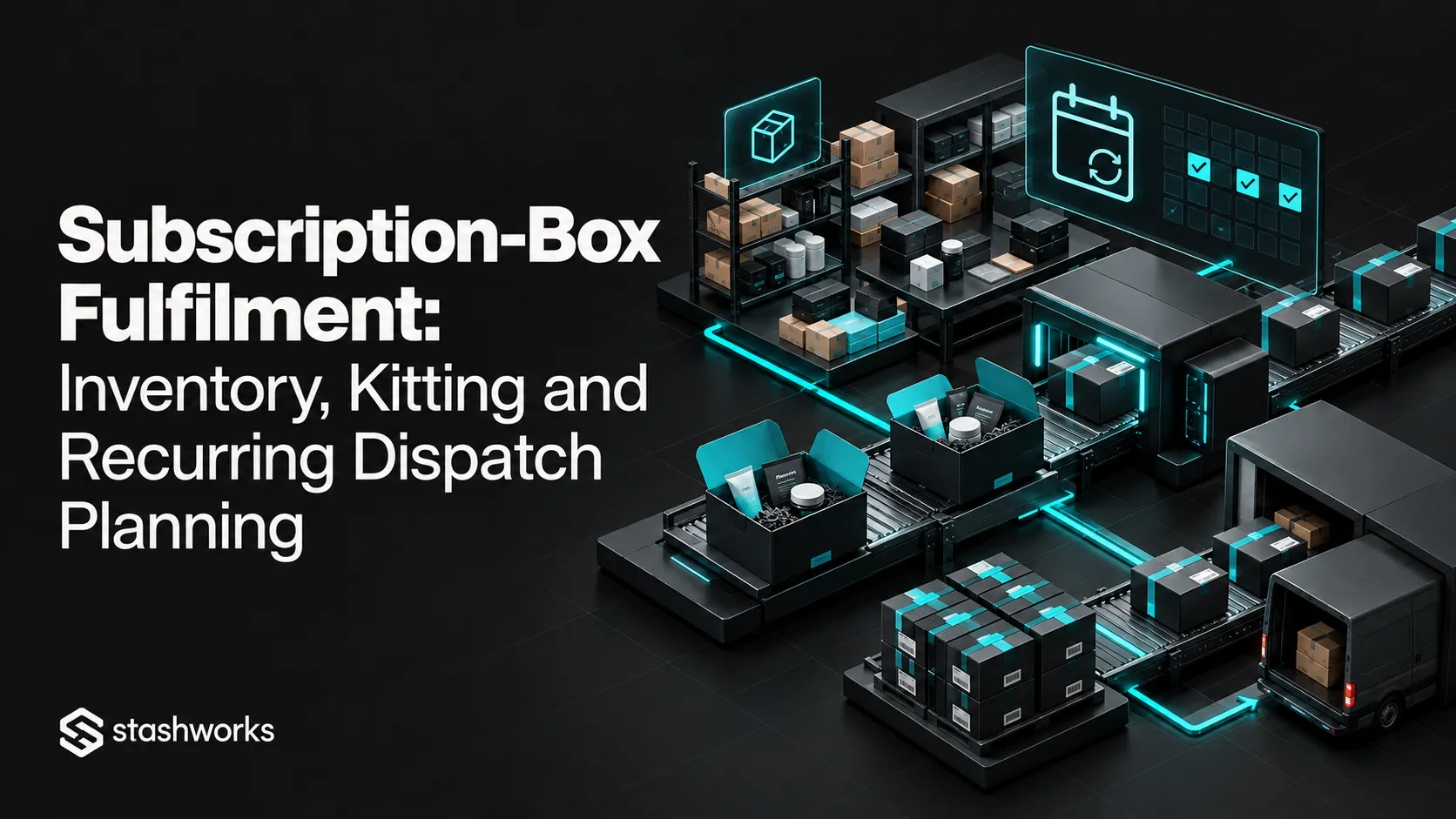
Subscription fulfilment looks repetitive because the same customers receive recurring shipments. Operationally, it can be more demanding than ordinary ecommerce because inventory, billing, kitting and dispatch all have to align to a recurring calendar.
Understand the subscription order model
Subscription platforms can create pay-per-delivery orders at each interval or manage prepaid subscriptions with scheduled fulfilments.
Build the fulfilment calendar backwards
Start with the customer dispatch date and work backwards through order cut-off, billing or contract updates, component availability, kitting, quality control and carrier collection.
Forecast active subscriptions separately from one-time demand
Subscription demand may be predictable at account level while individual products inside the box are also sold through ecommerce or retail. Forecast both sources.
Reserve components at the right time
If inventory is reserved too early, stock may sit unavailable for weeks. If reservation happens too late, other channels can consume components promised to subscribers.
Use a bill of materials for every box version
The warehouse needs the component SKUs, quantities, packaging materials, inserts and substitutions for each subscription configuration.
The existing Kitting and Product Bundling guide explains the component logic behind pre-assembled kits.
Version the box when contents change
If monthly boxes contain different items, record the effective cycle or version so old and new boxes can be distinguished.
Decide whether to pre-kit or kit after order release
Pre-kitting can move labour ahead of the dispatch peak and improve batch quality control. Late kitting preserves flexibility but concentrates work close to dispatch.
Set the subscriber-change cut-off
Customers may pause, cancel, change address or switch products. Define when those changes stop affecting the upcoming box and begin applying to the next cycle.
Handle failed billing separately from fulfilment
A failed renewal should not enter the fulfilment queue simply because the customer was active last month.
Plan substitutions before stock runs short
If substitutions are permitted, define approved alternatives, quantity and value rules before the warehouse encounters a shortage.
Use batch quality control
Before a large run ships, inspect representative finished kits for correct components, variant, inserts, presentation and label.
Control personalised inserts separately
Names, messages or customer-specific materials add another data stream. Test how the warehouse associates personalised content with the correct order.
Plan packaging material as inventory
Branded boxes, dividers, tissue, cards and inserts can become the bottleneck even when product stock is healthy.
Use recurring dispatch waves
A single huge dispatch day can overload packing stations and carrier collections. Where the customer promise allows it, use planned waves.
Handle subscription returns with cycle context
A returned box may contain several components and may arrive after the next cycle has already shipped. Preserve the original order and box version during inspection.
Measure cycle performance
Track boxes due, orders released, kits completed, on-time handover, component shortages, substitution rate, packing errors and returns.
Where Stashworks fits
Stashworks' Ecommerce Fulfilment service includes pick and pack, kitting, bespoke packing and returns within agreed scope. Subscription operations should be scoped around the recurring calendar, component structure, packaging and integration behaviour.
Sources: Shopify Help Center, Managing and Fulfilling Subscription Orders; Stashworks, Ecommerce Fulfilment.