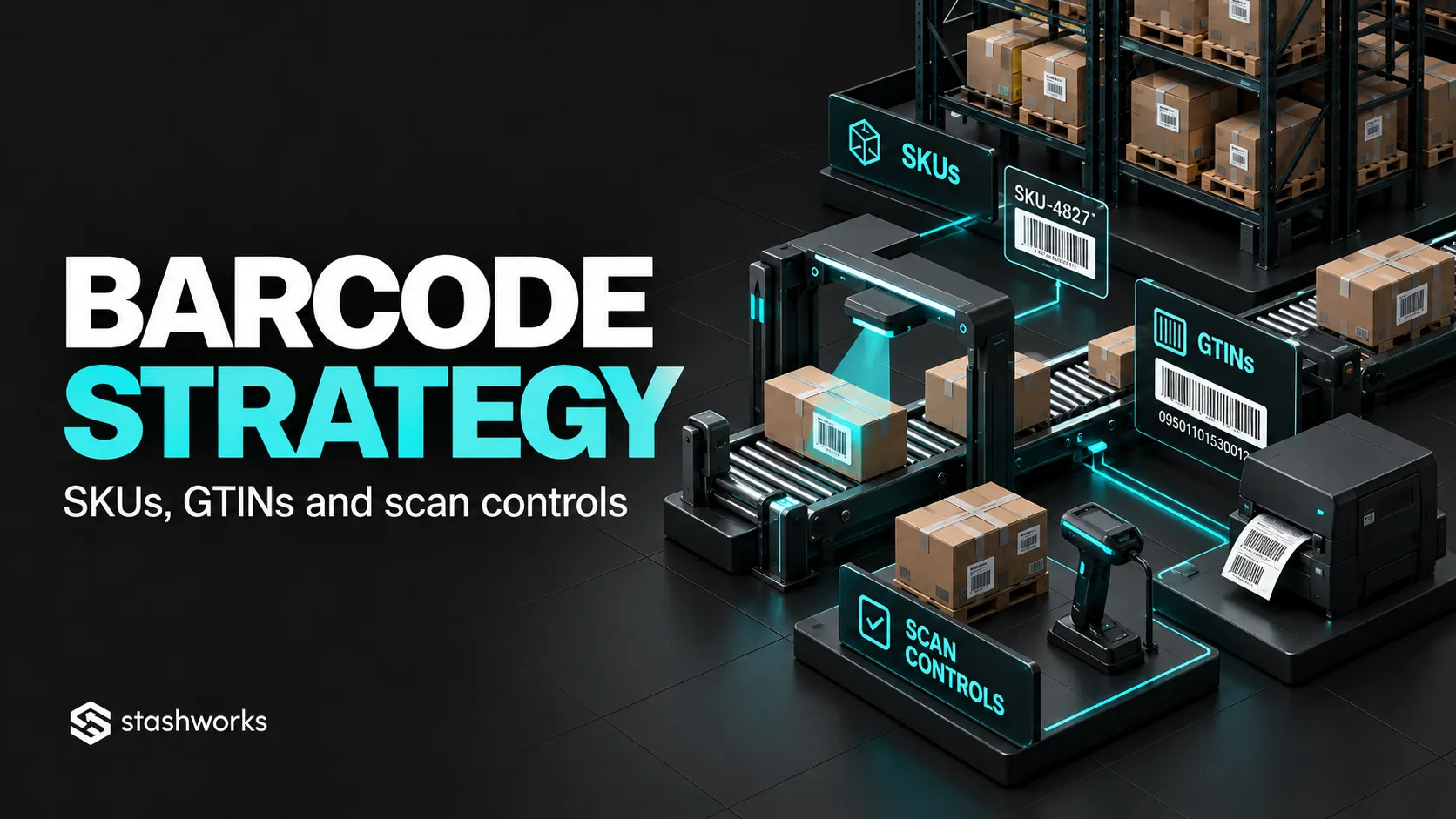
Barcodes are useful because they let a warehouse verify physical products without asking a worker to interpret every label manually. But a barcode strategy only works when the identifier behind the scan is stable, unique and mapped correctly to the warehouse SKU.
The first distinction to understand is that SKU, GTIN and barcode are related but not interchangeable.
A SKU is your internal product identity
A stock keeping unit is an identifier the business creates for its own catalogue. It should uniquely identify the sellable variant the warehouse must distinguish.
The existing SKU Management guide covers the architecture in more detail.
A GTIN is a global trade-item identifier
GS1 defines the Global Trade Item Number as a unique identifier for a trade item that may be priced, ordered or invoiced within a supply chain. Different trade items need different GTINs under GS1 allocation rules.
The brand owner is normally responsible for allocating the GTIN according to GS1 rules.
A barcode is the data carrier the scanner reads
The black-and-white symbol is not the same thing as the identifier. It encodes data so a scanner can read it. GS1 explains that common barcode symbols can encode GTINs, while the associated product information remains in the database.
Do not use one code for several distinct variants
If colour, size, pack quantity or another attribute changes the sellable trade item, the identification strategy must reflect that difference. A scan should not leave the warehouse guessing which variant was picked.
Keep marketplace IDs separate from physical identifiers
Shopee, Amazon, Shopify and other channels may create listing IDs or seller SKUs. Those identifiers are useful for order mapping but should not be confused with the scannable code on the product unless the warehouse has explicitly designed the workflow around them.
Map every accepted code to one warehouse SKU
A warehouse can support more than one accepted code for a SKU where necessary, but each scanned value should resolve predictably. Duplicate codes across different products create a high-risk failure mode.
Check scan quality before the first inbound
A technically valid barcode can still be difficult to scan if it is too small, damaged, distorted or placed poorly on packaging. Test real units with the scanners and lighting used in the warehouse.
GS1's current General Specifications define identification and barcode rules across retail and logistics environments.
Decide which packaging level is being identified
A consumer unit, inner pack, case and pallet can require different identifiers. Do not assume the barcode on one retail unit is sufficient for efficient carton or pallet receiving.
GS1 uses the SSCC to identify logistic units such as pallets or transport units, while GTIN identifies trade items.
Use receiving scans to verify identity
At inbound, scanning can confirm that the physical product matches the expected SKU. The receiving process should still handle unknown, duplicate or unreadable codes as exceptions rather than forcing stock into a guessed record.
Use pick scans to reduce visually similar errors
Two variants can look nearly identical. A scan check compares the product presented by the worker with the item expected by the WMS.
Stashworks' current Technology page describes QR-based product verification within its picking workflow. The exact supported code types and label requirements should be confirmed for the specific catalogue.
Use packing verification when risk justifies it
A second scan or verification step at packing can catch an incorrect pick before shipment release. This is particularly useful where products are high value, visually similar or frequently bundled.
Do not encode unstable business data into the SKU
Price, campaign name, sales channel and warehouse location can change. Keep those attributes in database fields rather than building them into product identity.
Plan for products without usable manufacturer barcodes
Decide whether suppliers will relabel units before shipment or whether the warehouse will apply an internal label as a separately scoped process. Define label ownership and quality control.
Control relabelling
Relabelling should preserve traceability between the original product, internal SKU and new scannable identifier. Avoid covering regulatory information or other required labels.
Test exception cases
Include unreadable barcode, unexpected barcode, duplicate code, wrong variant, missing label and bundle-component scenarios in onboarding tests.
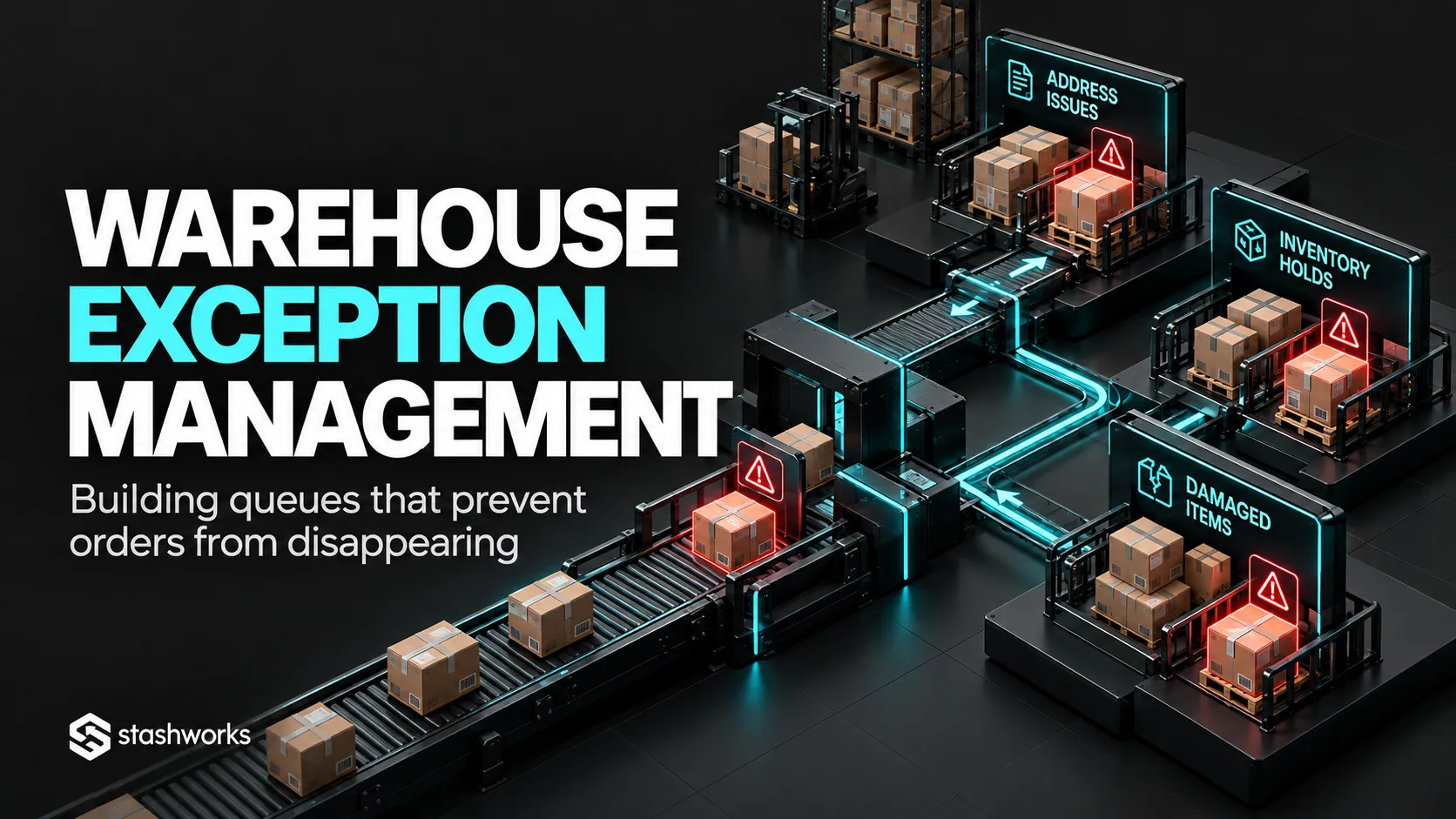
Those failures should enter the controlled queues described in Warehouse Exception Management.
Measure scan-control effectiveness
Track barcode-related receiving exceptions, pick verification failures and relabelling volume. A high exception rate usually indicates a product-data or supplier process problem rather than a scanner problem.
Keep the strategy proportional
A simple catalogue may need only unique SKUs and reliable unit barcodes. A complex operation may also need case, pallet, serial or batch identification. Add complexity only when it solves a real receiving, inventory or fulfilment requirement.
Sources: GS1, What Is a GTIN?; GS1 General Specifications; Stashworks, Technology.