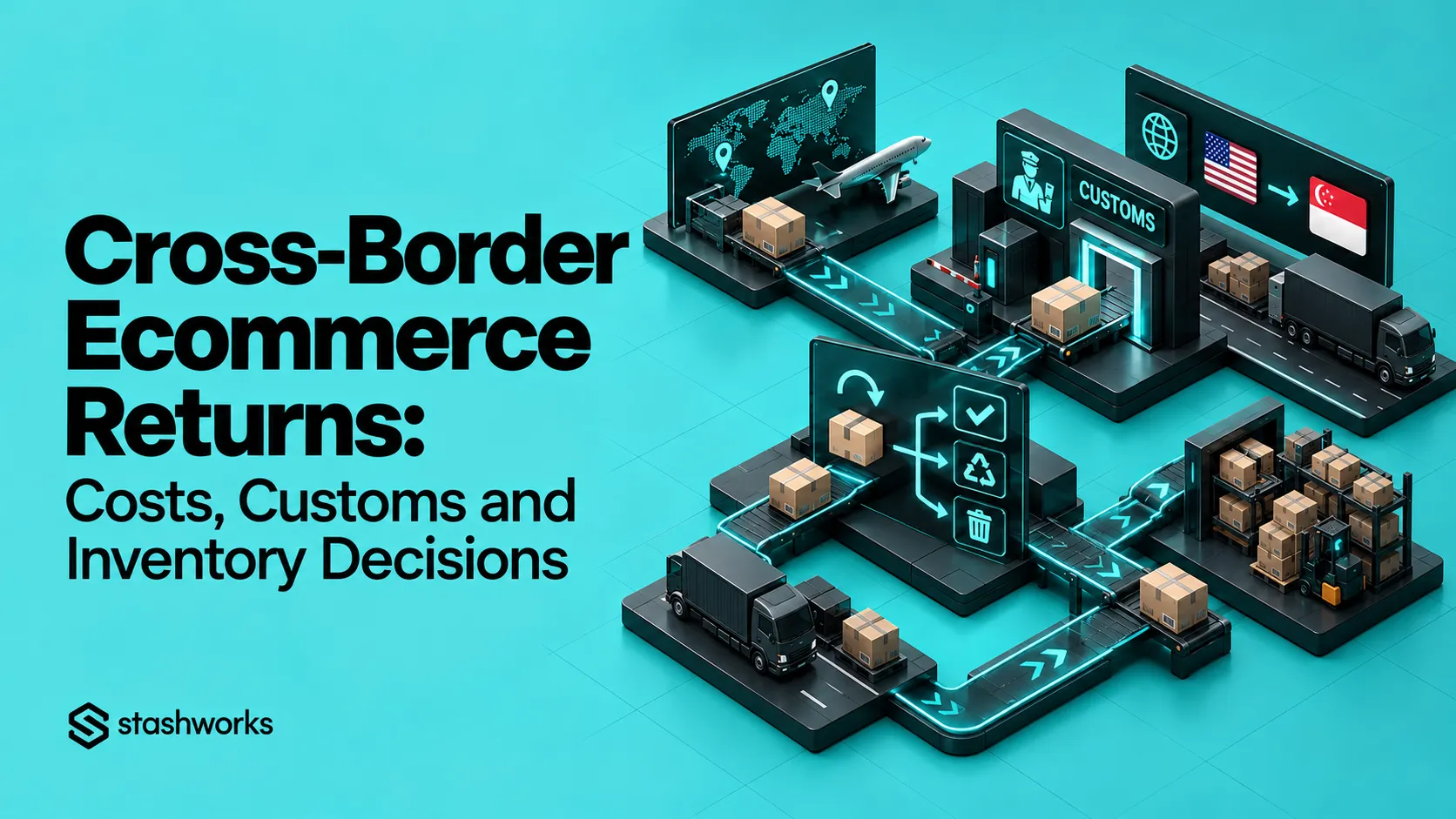
Cross-border returns are not simply domestic returns with a longer shipping label. The returned parcel can cross a customs border again, incur transport and handling costs, create questions about tax or duty, and arrive in a country where the brand has no straightforward way to inspect or resell it.
The right workflow therefore starts with an economic and customs decision before every returned unit is automatically routed back to the original warehouse.
Begin with the reason for return
Separate customer preference, wrong item, fulfilment error, delivery damage, product defect and refusal at import. These reasons can lead to different commercial and customs outcomes.
A product returned because it was damaged in transit may need evidence for a carrier claim, while a product returned because the buyer changed their mind may be physically saleable.
Do not default every return to the origin warehouse
A low-value product can cost more to move internationally than the recoverable inventory value. Compare the item's recovery value with return postage, brokerage, customs processing, inspection, repacking and onward storage.
The existing Ecommerce Returns guide covers the general reverse-logistics process; cross-border returns add the border and tax layer.
Choose a return disposition before transport
Common options include return to origin, return to a local warehouse or partner, local refurbishment, local resale, supplier return, donation, recycling or approved disposal.
The decision should consider product value, condition, regulatory restrictions, customer promise and whether the unit can realistically re-enter saleable inventory.
Identify who is exporting the return
The customer, marketplace, carrier or local partner may appear as the exporter or sender on the return shipment depending on the arrangement. Define who prepares the declaration and who supplies the supporting invoice or return reference.
Do not rely on the customer to invent customs wording.
Identify who will import the returned goods
If the goods return to Singapore, the receiving party needs to understand the applicable re-import process. Singapore Customs states that re-imported goods may still be subject to GST and/or duty depending on the scenario, although relief can apply in specified cases.
For goods previously exported and returned because they were damaged, defective or rejected, Singapore Customs sets conditions for relief that depend on prior permits, tax treatment and the condition of the goods.
Keep the original export evidence
Return customs treatment can depend on proving that the goods were previously exported. Preserve export permits, airway bills or bills of lading, commercial invoices, order records and any previous GST or duty documentation relevant to the transaction.
Without the original evidence, it can be harder to establish that the parcel is a returned good rather than a new import.
Use a customs value that reflects the return transaction
A return may not involve a new commercial sale, but customs authorities can still require a declared value for customs purposes. Singapore Customs notes that where no sale is involved, documentation may state a value for customs purposes, supported by relevant records.
Do not declare a nominal value simply to reduce tax exposure.
Separate refund timing from inventory recovery
The customer may be refunded before the product completes international transport. That creates an operational gap: finance considers the transaction closed while the physical unit is still in transit.
Track the return reference until the item is either recovered, written off or disposed of.
Do not make returned stock saleable at arrival
The unit should enter an inspection or quarantine state before returning to available inventory. Check condition, completeness, seals, expiry, serial or batch identity where relevant, and any customs or regulatory restriction.
Use the status framework in Inventory Statuses Explained.
Decide whether original duties or taxes can be recovered
Refund or relief rules vary by country and transaction. In Singapore, Singapore Customs publishes separate procedures for re-imports and refunds of duties or GST. A customer return does not automatically reverse the original import tax.
Confirm the specific treatment with Singapore Customs, IRAS or qualified advisers where the value is material.
Model three cost outcomes
Compare the cost of returning the item to origin, recovering it locally and writing it off. Include transport, customs or brokerage, warehouse handling, inspection, repacking, customer-service work and expected resale value.
A higher-value product may justify international recovery; a low-margin item may not.
Use local returns hubs where volume justifies them
Brands with meaningful returns volume can consolidate returns locally before moving stock in bulk, or inspect and disposition units in-market. This can reduce per-item international transport but adds another location and process to manage.
Consolidate only compatible return outcomes
Do not consolidate saleable stock, damaged units, regulated products and items awaiting a carrier claim into one undifferentiated return load. Preserve return status and references so the destination warehouse knows what each unit is.
Give customer service one policy matrix
Agents should know which destinations receive a return label, which products are refunded without physical return where policy allows, which items require local drop-off and which cases need escalation.
A policy matrix reduces ad hoc international shipping decisions.
Track return economics by market
Useful measures include return rate, return transport cost, customs or brokerage cost, percentage recovered to saleable stock, average return-processing age and write-off value.
A market with strong sales can still be operationally unattractive if reverse logistics is consistently uneconomic.
Where Stashworks fits
Stashworks' Ecommerce Fulfilment service can include returns processing within the agreed scope, while Freight Forwarding can support cross-border movement. The exact customs role, importer responsibilities and return destinations should be confirmed for each market rather than assumed.
General information only: Customs, tax and re-import relief rules depend on the countries, product and transaction. Confirm current requirements with the relevant authorities and advisers.
Sources: Singapore Customs, Re-importing Goods Sent Overseas for Activities; Singapore Customs, Refund of Duties and GST; Stashworks, Ecommerce Fulfilment.