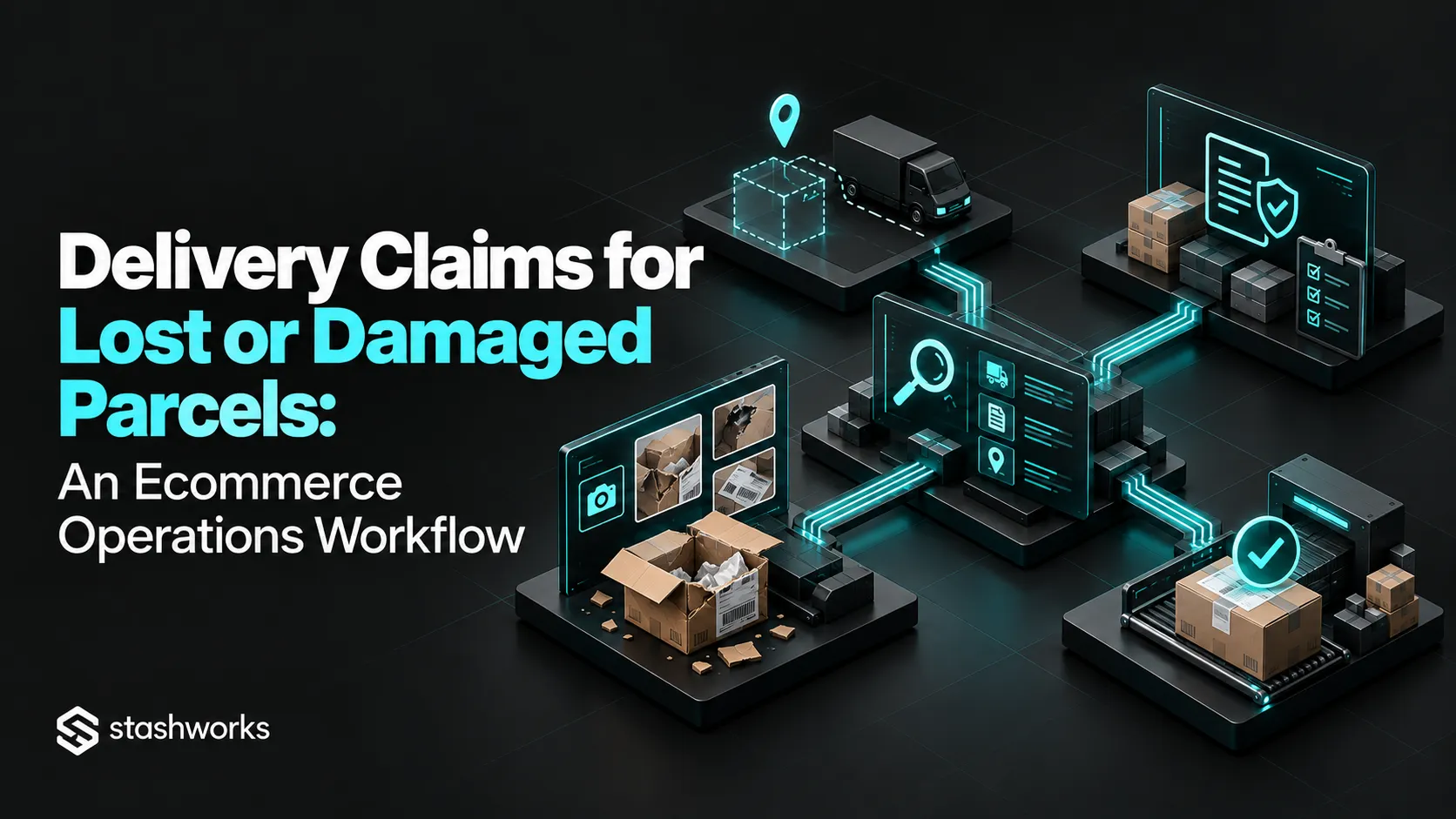
A delivery claim is both a customer-service issue and an operations case. The customer needs a resolution quickly, while the business needs enough evidence to recover value from the carrier where the contract allows it and to identify whether the loss began in fulfilment, transport or delivery.
Classify the incident first
Lost shipment, delivery damage, missing contents, misdelivery and delayed shipment can follow different carrier processes. Record the incident type before opening a generic claim.
Preserve the tracking history
Capture the tracking number, carrier, service, ship date, handover scan, delivery events and any proof-of-delivery information.
Keep the original order and fulfilment evidence
Retain the customer order, SKU and quantity, pick and pack record, parcel weight, packaging method and shipment label.
Photograph damage before packaging is discarded
Ask the customer or receiving team to photograph the outer packaging, internal cushioning, product damage, shipping label and any visible impact.
Keep the packaging until the claim is resolved
Carriers can request inspection. Discarding the box or cushioning too early can weaken the evidence.
Check the carrier's claim deadline
Claim windows differ by carrier, service, country and incident type. Use the current contract and carrier guidance rather than copying a deadline into internal policy permanently.
Collect proof of value
Carriers may request purchase invoices, manufacturer invoices, repair estimates, receipts or other evidence to substantiate the claimed amount.
Check standard liability versus purchased cover
Postal and courier services can have capped standard liability. Do not assume every parcel is insured for the customer selling price.
Resolve the customer on your own service policy
The business may decide to refund or replace the customer before the carrier finishes its investigation. That customer-service decision should remain separate from the carrier's liability decision.
Link replacements to the original incident
If a replacement is sent, record the replacement order and shipment against the original case. This prevents double compensation or confusion when the first parcel later appears.
Reconcile inventory
A lost parcel has left warehouse stock but never completed the customer journey. A replacement consumes additional inventory. Record both movements correctly rather than adjusting stock manually.
Separate packing claims from carrier claims
If the wrong item was packed, the carrier did not cause the error. Investigate fulfilment evidence before filing a transport claim.
The existing Order Accuracy guide covers warehouse error controls.
Investigate damage patterns
Repeated damage on one SKU, packaging format or carrier lane should trigger packaging review rather than repeated individual claims.
Use Fragile-Product Fulfilment for higher-risk products.
Track claims as an operational queue
Use statuses such as evidence requested, filed, carrier reviewing, inspection pending, approved, rejected and closed. Assign an owner and next action.
Measure claim rate and recovery rate separately
Claim rate shows how often incidents occur. Recovery rate shows how much value the business successfully recovers from carriers or insurers.
Use root cause to change carrier or packaging decisions
Review incidents by carrier, service, destination, SKU, packer, box type and damage type. A pattern can justify different packaging or routing.
Where Stashworks fits
Stashworks' Last-Mile Delivery service can connect fulfilment with carrier handover and delivery coordination. The exact carrier liability, claim submission, evidence and reimbursement process should be confirmed for the account and carrier used.
Sources: FedEx, Claims; SingPost, Speedpost International.