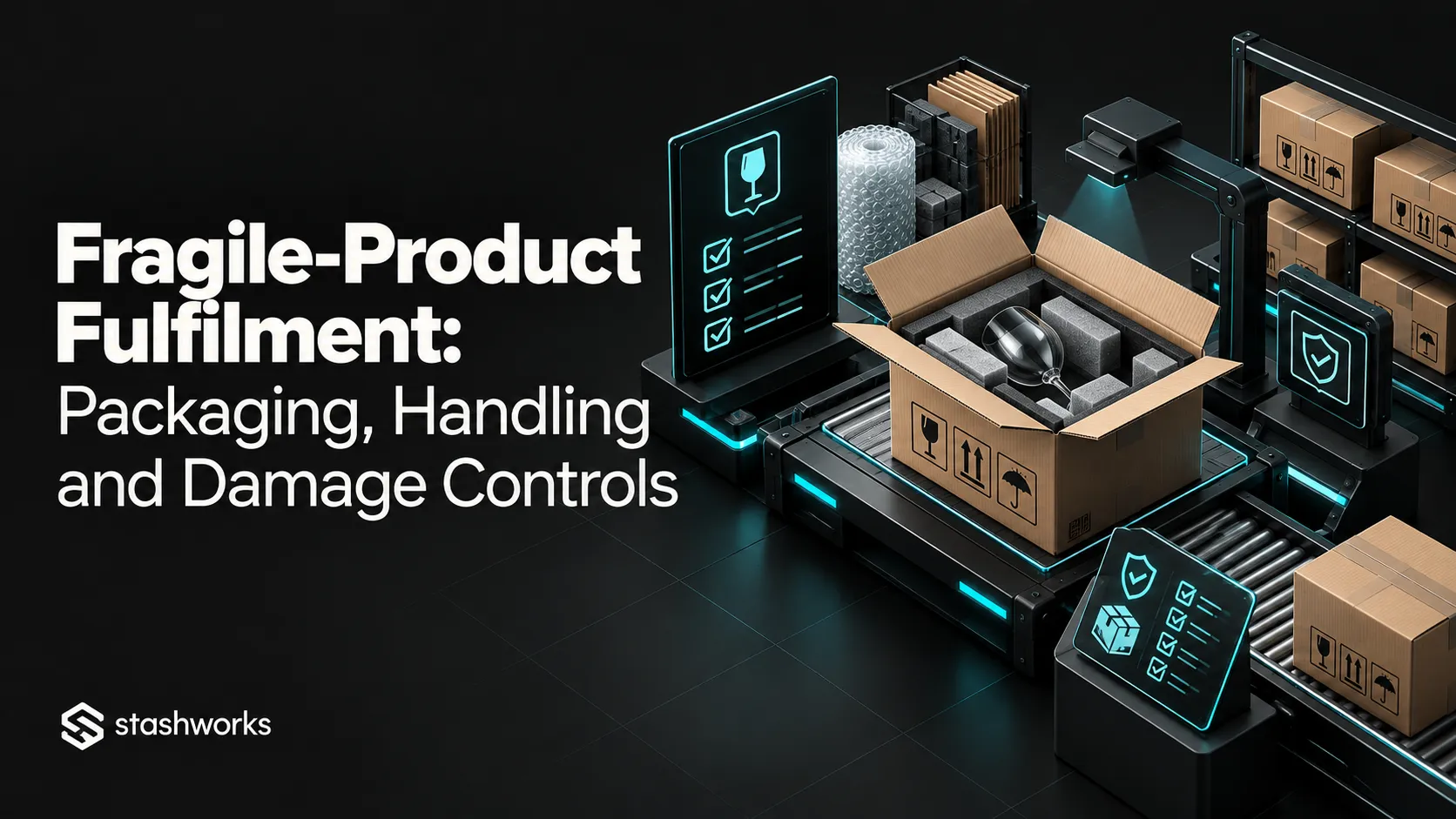
Fragile-product fulfilment begins before the item reaches the packing bench. Product master data, storage location, handling instructions, packaging materials, carton selection and carrier service all influence whether the customer receives an intact product.
Define what makes the product fragile
Glass, ceramics, electronics, cosmetics, liquids and products with delicate finishes can fail in different ways. Identify impact, compression, vibration, leakage, moisture or temperature as relevant risks.
Record handling requirements in the product master
Store dimensions, weight, orientation requirements, dangerous-goods status where applicable, liquid status and approved packaging method.
Use a rigid outer package appropriate to the load
UPS recommends rigid corrugated packaging with sufficient strength for the contents and advises shippers not to exceed the box's weight limit.
Leave controlled cushioning space
Fragile goods need enough room for protective material between the product and outer walls. Too little space transmits impact directly; too much uncontrolled empty space allows movement.
Wrap individual items separately
When several fragile units share a carton, prevent direct contact using dividers, sleeves, foam, bubble cushioning or other tested materials appropriate to the product.
Use double boxing where the risk justifies it
Double boxing can be appropriate for sharp, fragile and certain high-value goods. This adds volume and dimensional weight, so use it based on damage risk rather than automatically.
Protect liquids against leakage
Bottles and containers should be sealed and protected so leakage does not destroy the rest of the parcel. Separately confirm dangerous-goods restrictions for regulated products.
Use carton sizes that match the approved pack-out
A fragile SKU should not be packed into whichever box happens to be available. Map approved carton sizes and cushioning quantities for standard order configurations.
Test the finished package
Do not approve packaging from a design file. Pack the real product with production materials and test it through representative handling conditions appropriate to the risk.
Control packaging substitutions
If the normal insert or carton is unavailable, define whether the warehouse can substitute an approved alternative or must hold the order.
Store fragile stock safely before fulfilment
Damage can occur in reserve storage, replenishment or picking before packing begins.
The slotting framework in Warehouse Slotting for Ecommerce helps balance access with product risk.
Use scanning to prevent wrong-pack errors
Two similar products can require different protective packaging. Scan verification ensures the item at the station matches the expected SKU.
Document damage discovered before dispatch
If the packer finds a cracked, leaking or compromised unit, move it to the appropriate damaged or quarantine state rather than shipping it.
The Inventory Statuses guide explains the state control.
Label the shipment correctly but do not rely on labels alone
Orientation or fragile labels can communicate handling information, but physical protection must tolerate normal parcel-network handling.
Capture evidence when damage occurs
Photograph product, internal protection and outer carton. Keep packaging where the carrier claim process requires it.
Use Delivery Claims for Lost or Damaged Parcels for the claims workflow.
Measure damage by packaging configuration
Track damage rate, claim value, replacement cost and customer complaints by SKU, box size, cushioning method, carrier and lane.
Balance protection with dimensional cost
Extra cushioning and double boxing can increase parcel size. Use Dimensional Weight Explained when comparing protection against shipping cost.
Where Stashworks fits
Stashworks' Ecommerce Fulfilment service can incorporate agreed packing, kitting and shipment-preparation requirements. Fragile products should be scoped with reference samples, approved materials and exception rules rather than a generic fragile designation.
Sources: UPS, Packaging Tips; UPS, Packaging Guidelines; Stashworks, Ecommerce Fulfilment.