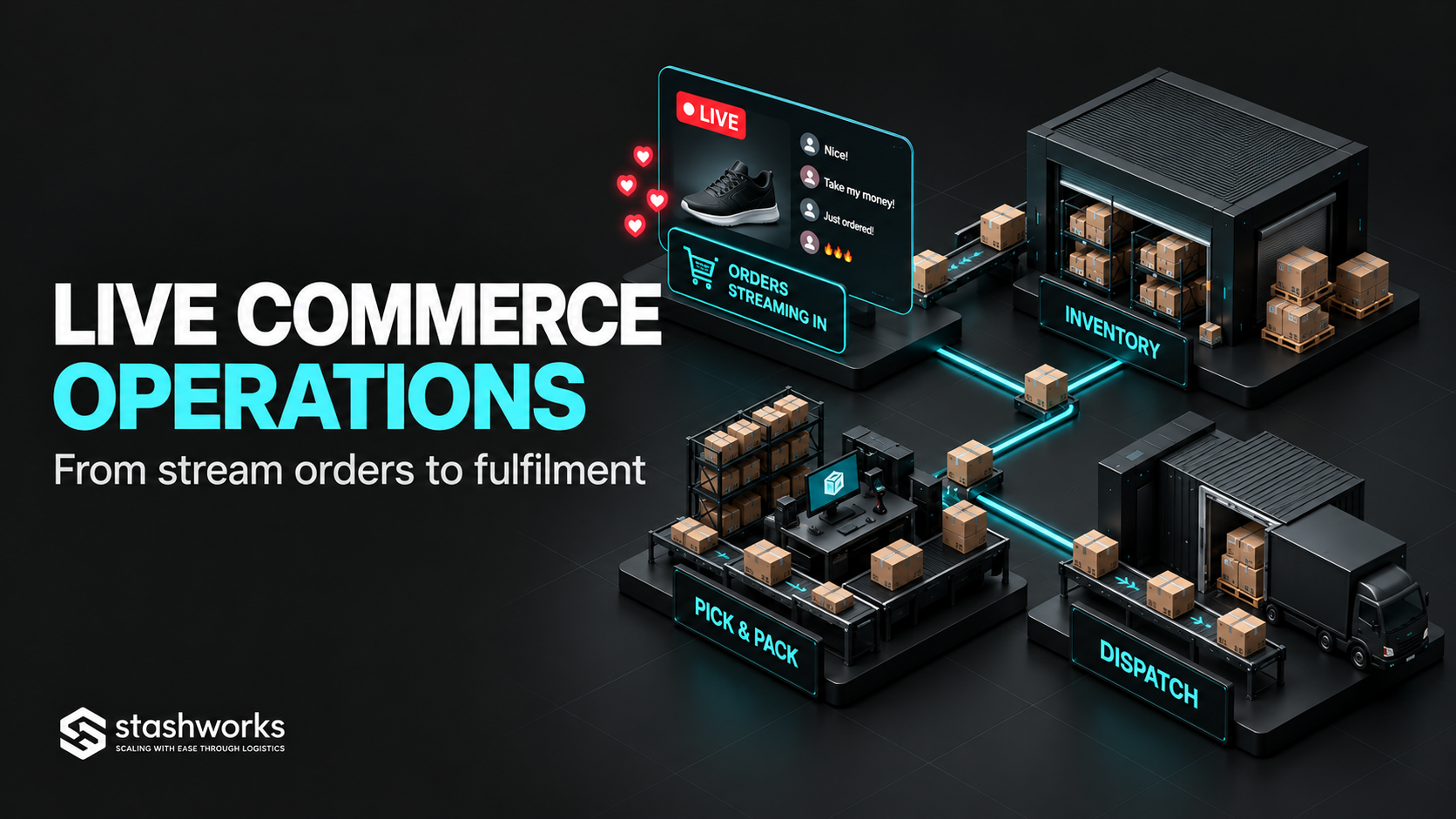
Live commerce changes the shape of demand. A traditional ecommerce campaign can build traffic over hours or days. A livestream can concentrate attention on one product at one moment and create a sharp order wave while the presentation is still running.
The warehouse does not need to become a television studio. It needs an operating model that turns that concentrated demand into controlled inventory reservations, clear order queues and accurate parcels.
The principle is simple: prepare the product and inventory system before the stream, then let the warehouse process the resulting orders through a disciplined fulfilment flow.
Lock the product identity before the stream begins
Every featured product, variant, bundle and promotional pack should map to a known internal SKU or component structure before it appears on screen.
Do not create last-minute marketplace variants without checking the warehouse mapping. A presenter can describe “black, medium” correctly while the order feed still points to an ambiguous or duplicated SKU.
For bundles, confirm whether they are pre-kitted or assembled from components after the order arrives.
Decide how much inventory the stream is allowed to promise
The physical warehouse may hold more stock than should be exposed to the livestream channel. Units can already be reserved, damaged, quarantined or needed for other channels.
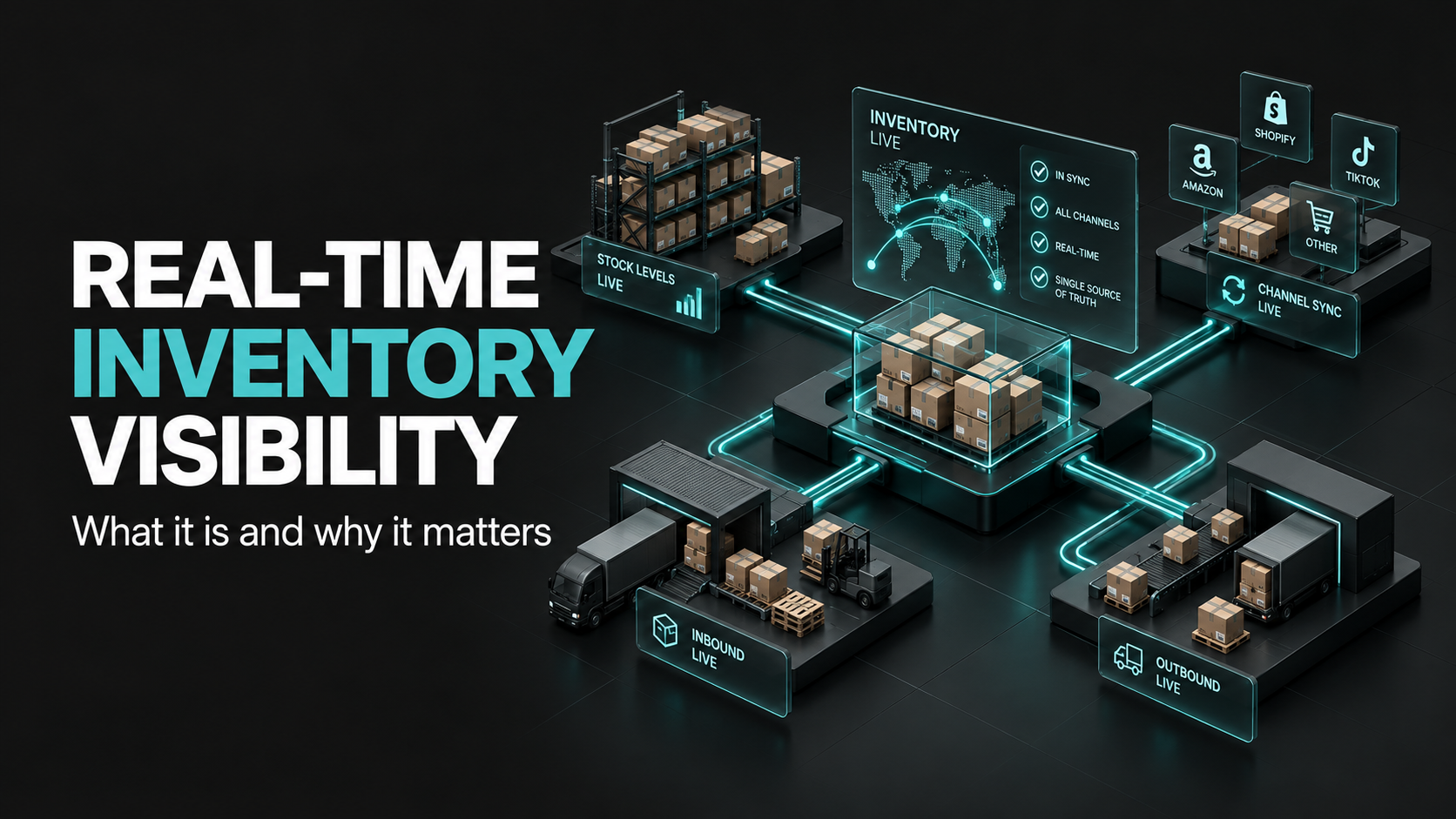
Calculate a sellable quantity and decide whether a channel-specific allocation or safety buffer is justified. If Shopify, Shopee, Lazada and TikTok Shop share the same physical stock, keep those allocations connected to one central inventory model.
The architecture is covered in the multichannel inventory guide.
Prepare for a demand curve that can change in minutes
A featured item can move from normal velocity to campaign velocity immediately after it is demonstrated or promoted. That makes average daily demand less useful during the event.
Identify the hero SKUs before the stream, place appropriate stock in efficient pick locations, confirm reserve replenishment and make packaging readily available. The aim is to remove search and setup work from the period when orders are arriving fastest.
Orders should enter one controlled queue
Whether the stream runs through TikTok Shop, LazLive or another commerce environment, the fulfilment operation needs a defined path from channel order to warehouse work.
Stashworks currently lists TikTok and Lazada among its supported integrations. For any live-commerce setup, confirm the exact connection used by the seller account and test how new orders, cancellations, inventory changes, shipment confirmation and tracking move through the system.
Reserve stock before the physical pick
If hundreds of customers order the same SKU in a short period, the inventory system should stop treating those units as freely available before pickers reach the shelf.
Reservations or allocations protect the same units from being promised again on another channel. This is particularly important near stockout, when even a short synchronisation delay can create several oversold orders.
The problem-focused controls are covered in How to Prevent Overselling Across Multiple Ecommerce Channels.
Release orders according to payment and cancellation rules
A live sale can generate excitement, but the warehouse should still receive only orders that are eligible for fulfilment according to the channel and business rules.
Define which statuses trigger release and what happens if a cancellation or change arrives after release. The team presenting the stream should not need to make warehouse decisions in real time.
Use waves where they make the operation clearer
If the stream heavily concentrates demand on a few products, the warehouse can group compatible orders into picking waves rather than treating every order as an unrelated journey.
The exact method depends on the WMS, order mix and layout. A wave can be useful when many orders contain the same hero SKU, while multi-line or exception orders may need a separate path.
Do not batch so aggressively that urgent platform deadlines or customer-specific packing requirements become invisible.
Protect verification when speed increases
High volume creates pressure to skip scans or packing checks. That converts a throughput problem into an accuracy problem.
Use product identification, location control and pick or pack verification appropriate to the operation. Visually similar variants promoted in the same stream deserve particular attention because the order mix can shift rapidly between them.
Plan the carrier handover before the order wave
Estimate how many parcels the event could create and confirm the relevant collection or drop-off process. A warehouse can clear the packing queue and still miss dispatch expectations if the logistics handover was sized for a normal day.
For marketplace orders, use the current platform deadlines and build an earlier internal target. The framework is covered in Marketplace Dispatch SLAs.
Keep an exception queue running during the stream
Monitor orders that fail to import, unmatched SKUs, no-stock picks, label errors, cancellations after release and inventory updates that fail to reach the channel.
A live dashboard showing total orders is useful for commercial teams. Operations also needs a smaller queue showing the orders and SKUs capable of becoming tomorrow's complaints.
Do not declare the event finished when the stream ends
The warehouse workload can peak after the presenter signs off. Continue monitoring unreleased orders, pick queues, packing queues and carrier handover until the campaign backlog is separated from normal new orders.
Then reconcile the channel order count, reservations, shipments and physical inventory for the highest-volume products.
Returns and cancellations are part of the campaign economics
A product promoted heavily in a short period can also create a concentrated return wave later. Keep the originating order and channel attached to the returned item, inspect its condition and only restore saleable inventory after the appropriate disposition.
This prevents returned but unsaleable stock from being promised again during the next campaign.
Measure stream-to-dispatch, not only stream revenue
Useful operational measures include order release delay, orders processed per hour, no-stock picks, pack accuracy, percentage handed over within the internal target, cancellations after release and inventory variance after reconciliation.
These measures help the business understand whether a successful stream created a repeatable fulfilment model or was rescued through overtime and manual intervention.
Use each event to prepare the next one
Record which products drove the order wave, when the peak occurred, the real units per order, the warehouse bottleneck, packaging usage and carrier capacity required.
Feed that evidence into the next livestream and the wider peak-season planning process.
Live commerce still relies on ordinary fulfilment fundamentals
Lazada publicly promotes LazLive as a seller live-streaming tool, and TikTok Shop provides its own ecommerce and fulfilment workflows. The channels may create demand differently, but the warehouse still succeeds through accurate product identity, trustworthy inventory, controlled order release, correct picking, packing and a reliable handover.
Stashworks does not need to be treated as a separate “live commerce service” for that model. Its relevant role is the existing integration and inventory layer plus ecommerce fulfilment. For a specific account, confirm that the intended channel events and campaign volumes can be supported before the stream goes live.
Sources: Lazada Singapore, Be a Seller and LazLive; TikTok Shop Singapore, Order Fulfilment Overview; TikTok Shop Singapore, Order Fulfilment Timelines; Stashworks, Technology.